![[citta murate veneto] Logo Trasp](https://cittamurateveneto.it/wp-content/uploads/elementor/thumbs/citta-murate-veneto-Logo-Trasp-q81hfxb660cjerdzpkmz2g2efhtngv5ypmrebvdwvk.png "[citta murate veneto] Logo Trasp")
![[citta murate veneto] Logo Trasp](https://cittamurateveneto.it/wp-content/uploads/2023/06/citta-murate-veneto-Logo-Trasp-300x300.png)

Castelfranco Veneto
Municipality
Via F. M. Preti, 36
Castelfranco V.to (TV) – 31033
Historical overview
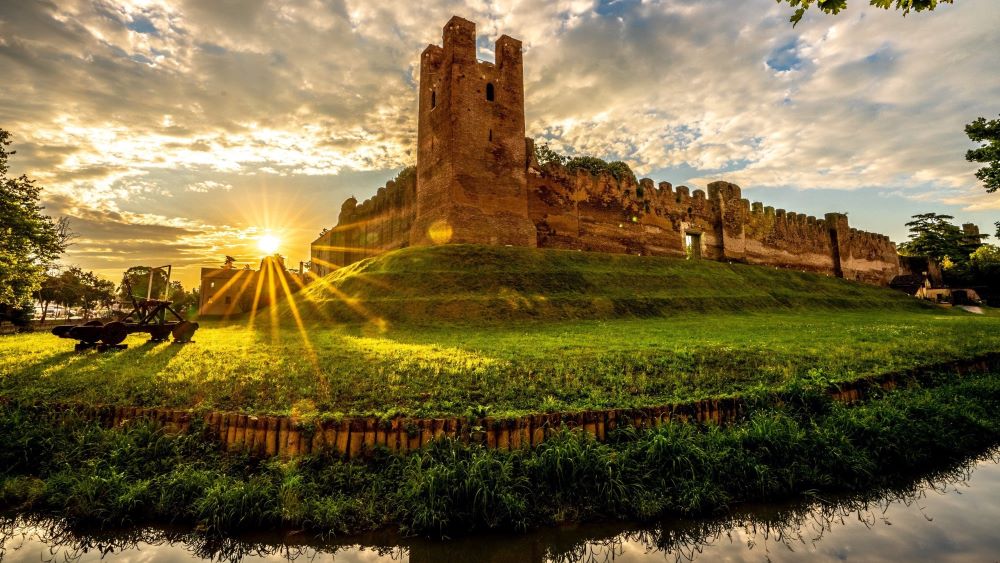
Castelfranco Veneto owes its name to the local castle, which was defined as franco as it was exempt from taxes for its original inhabitants and defenders. Built on top of a pre-existing embankment at the end of the 12th century by the medieval municipality of Treviso, the imposing red brick fortification was constructed just north of the village of Pieve Nova, on the eastern bank of the Muson stream, to guard the border with the lands of Padua and Vicenza.
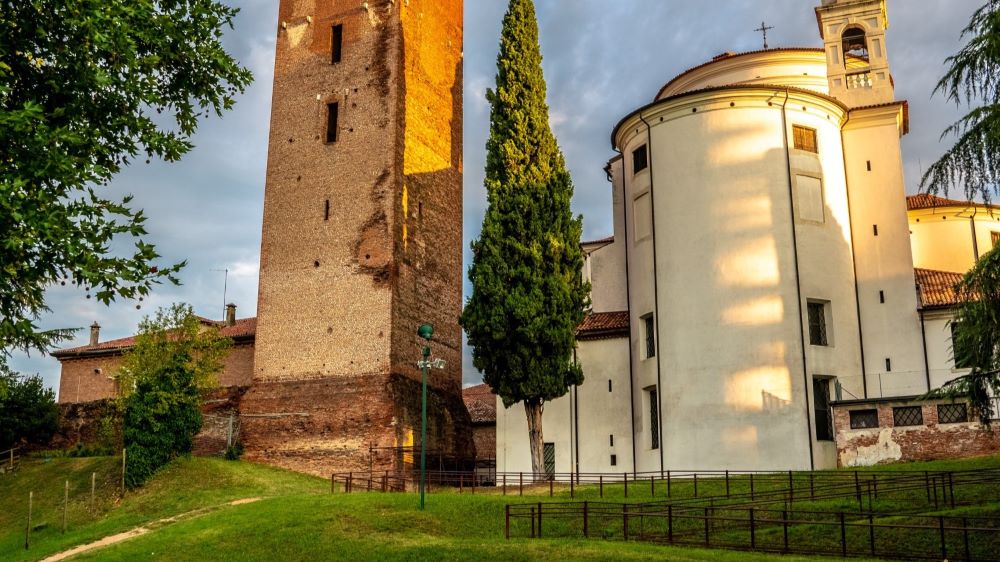
As a walled city, it has preserved almost all of its walls and six towers, which are located at the four corners and at the midpoints of the eastern and southern sides.
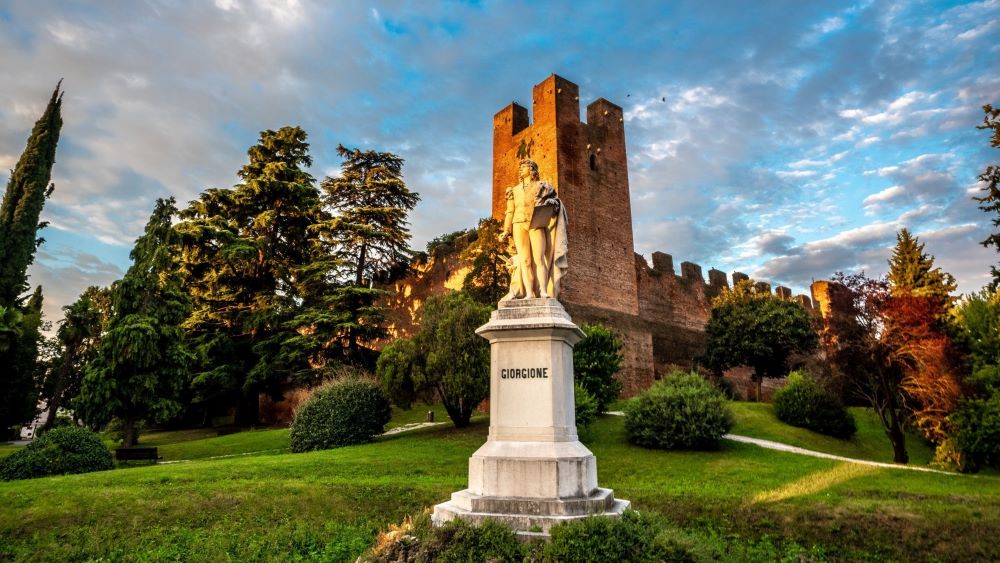
Castelfranco is renowned as the birthplace of one of the most significant figures in art history: Giorgione (1478–1510), a master of light and colour. The fortress houses two of the few works attributed to the painter: the frieze of Casa Marta Pellizzari and the altarpiece of the Duomo di S. Liberale.
City itinerary
Castelfranco Veneto awaits you for an unforgettable journey through history, art and culture, both inside and outside its majestic walls!
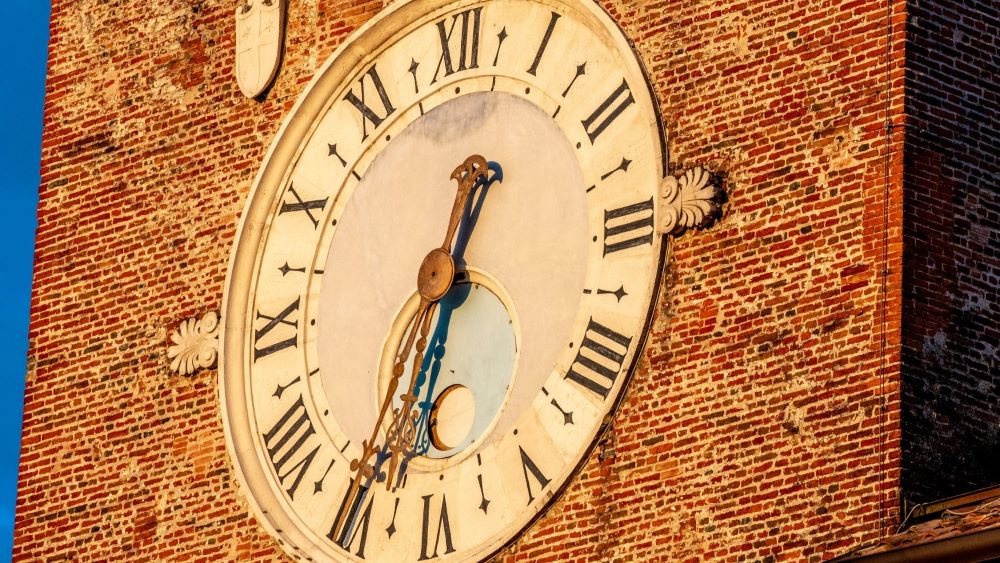
Begin your journey at the Tourist Information Office and visit the Chiesa di San Giacomo (Church of San Giacomo) and its Chiostro dei Serviti (the Cloister of the Serviti), a place of serene beauty. Then, head towards the historic centre. Pass under the archway of the imposing Torre Civica (the Civic Tower), one of the city’s symbols, and begin exploring the castle’s interior, enclosed by medieval walls: a real glimpse into the past! The castle will welcome you with its cobbled streets and guide you on a journey of discovery to the most significant places in Castelfranco. The heart of the castle is Piazza San Liberale (San Liberale Square), home to the Museo Casa Giorgione (the Casa Giorgione Museum), which pays tribute to the famous painter. Giorgione’s Fregio delle Arti Liberali e Meccaniche (Frieze of Liberal and Mechanical Arts) is preserved on the first floor of the building. Adjacent to the museum is the Duomo di Santa Maria Assunta e San Liberale (the Cathedral of St. Mary of the Assumption and St. Liberale), where you can admire Giorgione’s altarpiece and other remarkable works in its precious sacristy. Just a few steps away, the library in the charming Palazzo del Monte di Pietà (the Pawnshop Palace) and the intimate Oratorio del Cristo (the Oratory of Christ) complete this cluster of landmarks.
Opposite to the Duomo stands the Town Hall, which houses the Oratorio della Madonna delle Grazie (the Oratory of Our Lady of Grace), a haven of peace and spirituality.
As you continue along Via Garibaldi towards Piazza Giorgione (Giorgione Square), stop to admire the Teatro Accademico (the Academic Theatre), an architectural masterpiece designed by the renowned architect Francesco Maria Preti from Castelfranco. The Galleria del Teatro (the Theatre Gallery) hosts temporary exhibitions and displays, which enrich its presence. Further along, you may wish to visit Casa Barbarella (Barbarella House), home to the Conservatory, whose owners are said to have been linked to Giorgione.
The walk along Via Garibaldi ends at the vibrant Piazza Giorgione (Giorgione Square), the city’s beating heart, where a lively weekly market is held. Here, you can admire the Paveion, also known as the Loggia dei Grani (the Granaries Loggia), which was once the setting for centuries of trade and encounters. Walk around the walls of Castelfranco and let the 19th-century gardens and the picturesque Passeggio Dante (lit. Dante’s Walk) enchant you; here, you can pay homage to the statue of our illustrious fellow citizen, Giorgione.
Just outside the town centre, you can visit the majestic Villa Parco Bolasco, an oasis of greenery and architecture. It is renowned for its English garden and the delightful Cavallerizza (the riding area). Heading towards Borgo Pieve, the Chiesa di Santa Maria della Pieve (Church of Santa Maria della Pieve) is also worth a visit, with its grandeur and wealth of works of art surprising you, among which are frescoes by Noè Bordignon.
Castelfranco Veneto is ready to reveal its treasures to you. Are you ready to discover them all?
Places of Interest
To display all the landmarks in the Municipality of Castelfranco Veneto, go to the dedicated page and filter the results according to your needs.