![[citta murate veneto] Logo Trasp](https://cittamurateveneto.it/wp-content/uploads/elementor/thumbs/citta-murate-veneto-Logo-Trasp-q81hfxb660cjerdzpkmz2g2efhtngv5ypmrebvdwvk.png "[citta murate veneto] Logo Trasp")
![[citta murate veneto] Logo Trasp](https://cittamurateveneto.it/wp-content/uploads/2023/06/citta-murate-veneto-Logo-Trasp-300x300.png)

Portogruaro
Municipality
Piazza Repubblica, 1
Portogruaro (VE) – 30026
Luogo di timbratura del Lasciapassare incluso nel kit “Viaggio nel tempo”:
Infopoint turistico
Museo della Citta’ – Torre di Sant’ Agnese
Historical overview
The town, an important river hub, was founded in 1140 by Gervino, who was both Bishop and Count of Concordia. In that same year, he granted autonomy to the portolani (the harbour masters) and the merchants and fishermen of Portogruaro. After establishing a free commune, they erected the city walls, which were designed to favour the port axis on the Lemene River and serve the two trade routes to Oderzo and Friuli. This explains the triple-spine layout and the Byzantine style, which was later softened by the gradual prevalence of mainland architecture. In 1420, the city passed from the Patriarchate of Aquileia to the Venetian rule, which enhanced its trade. The city could be accessed through five gates, three of which — dedicated to San Gottardo (St. Gotthard), Sant’Agnese (St. Agnes), and San Giovanni (St. John) — still exist today. The process of urban standardisation accelerated with the demolition of the city walls at the beginning of the 20th century, the development of the suburbs, and the reclamation of the meanders, marshes, and valleys that once surrounded the historic settlement.
City itinerary
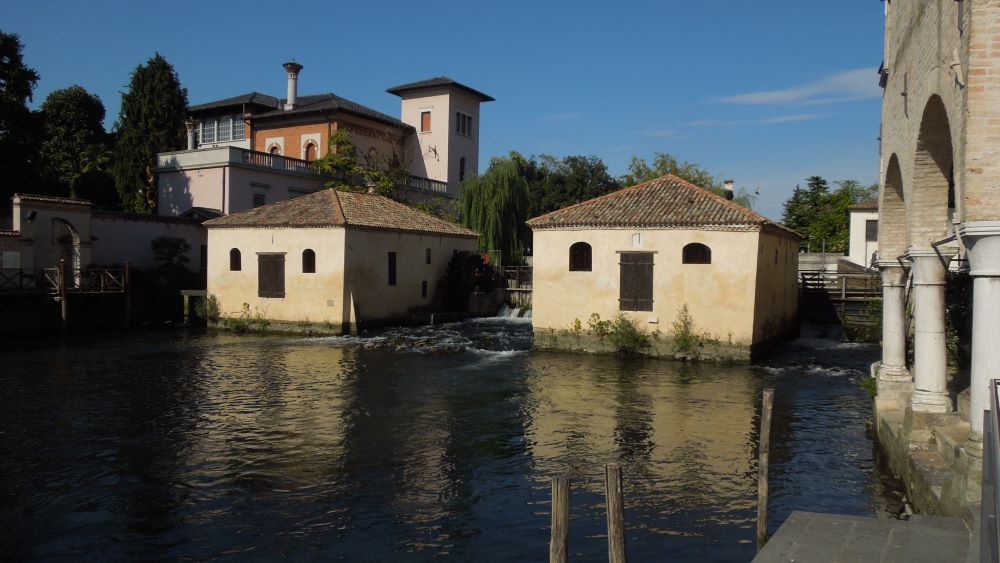
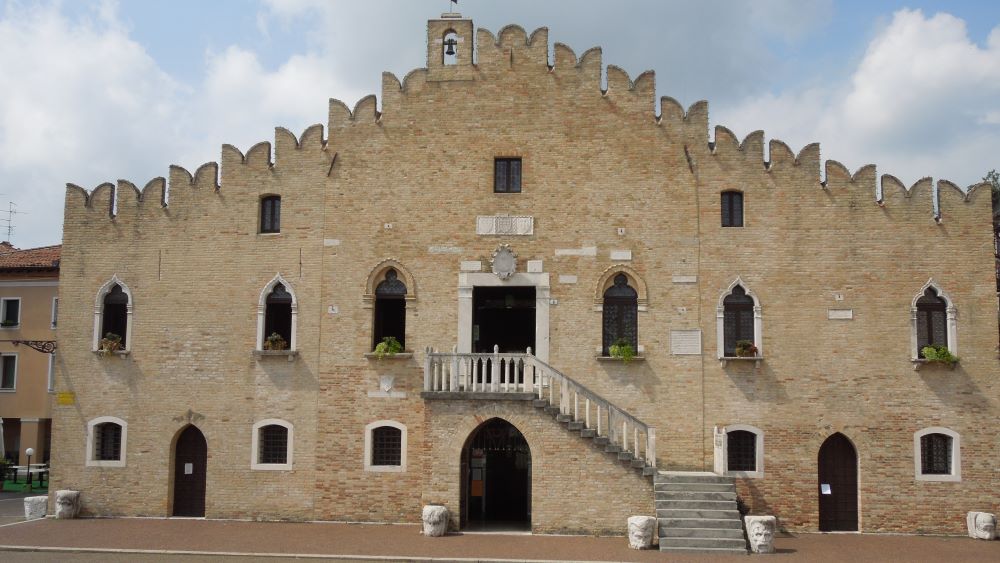
The city tour begins where the demolished Porta S. Nicolò (lit. St. Nicholas Gate) once stood. From Via Garibaldi, you can immediately recognise the city’s layout, which is shaped according to the river: two main axes running along the opposite banks of the Lemene River, connected by four bridges. Built in 1265, the city walls enclosed this area and featured four gates at the ends of the two roads. The city’s beauty comes from the combination of land and water, which has created a sinuous pattern of buildings facing both the street and the river, taking inspiration from the Venetian model. Of the walls, only three gates and the moats remain, such as the “Fossa di Circonvallazione” (lit. the Ring road ditch) along Via degli Spalti and around the Parco della Pace, formerly known as the garden of Villa Marzotto. In Via Seminario, you will find the Museo Nazionale Concordiese (lit. the Concordia’s National Museum) and the 18th-century Palazzo del Collegio Vescovile (lit. the Bishop’s College Palace). Further along, Via Cavour is bordered to the south by the Gothic Porta Sant’Agnese (1243), which is now home to the Museo della Città (lit. the City’s Museum). Behind the tower, in an alleyway, are the remains of the city walls and of a watchtower. You can then cross the Lemene River via the fortified bridge on Via Rastrello, an ancient “water gate” used to control boats. This leads to Via Martiri della Libertà, formerly Strada della Mercanzia, closed to the south by Porta San Giovanni (late 12th century). Outside the gate, you can admire the Fondaco del Sale (lit. the Salt Warehouse) — also known as Palazzo Bergamo Pari (lit. Bergamo Pari Palace) — and, a little further on, the 14th-century Chiesa di San Giovanni (lit. the Church of St. John). On the way back, the main street features porticoes adorned with frescoes and the frequent reuse of Roman tombstones and friezes from Concordia. In the centre is Piazza della Repubblica (lit. the Republic Square), dominated by the Gothic brick Palazzo del Municipio (the Town Hall), with its Ghibelline battlements and single-lancet windows. To one side stands the well, designed by G. A. Pilacorte in 1494 and adorned with two bronze cranes, the city’s symbol. Behind the palace, on the Lemene River, lies the city’s industrial heart: a small, Venetian-like “Grand Canal” with the fish market loggia, l’Oratorio della Madonna (lit. the Oratory of the Madonna), the noble palaces’ water gates and the 15th-century mulini di Sant’Andrea (lit. S. Andrew’s mills). Nearby is Piazza del Duomo (lit. the Cathedral Square), dominated by the homonymous Duomo di Sant’Andrea (lit. the Cathedral of St. Andrew). This was built between the 18th and 19th centuries on the site of a Romanesque church, of which the tall bell tower still remains. The route ends with the spectacular Porta San Gottardo, dating back to 1150, located to the north.
Places of Interest
Per visualizzare tutti i luoghi di interesse del Comune di Portogruaro accedi alla pagina dedicata e filtra i risultati secondo le tue esigenze.