![[citta murate veneto] Logo Trasp](https://cittamurateveneto.it/wp-content/uploads/elementor/thumbs/citta-murate-veneto-Logo-Trasp-q81hfxb660cjerdzpkmz2g2efhtngv5ypmrebvdwvk.png "[citta murate veneto] Logo Trasp")
![[citta murate veneto] Logo Trasp](https://cittamurateveneto.it/wp-content/uploads/2023/06/citta-murate-veneto-Logo-Trasp-300x300.png)

ASOLO
Municipality
Piazza d’Annunzio
Asolo (TV) – 31011
Where to stamp the ‘Lasciapassare’ included in your ‘Traveller’s Kit’.
Tourist information office
Piazza Garibaldi, 73
Historical overview
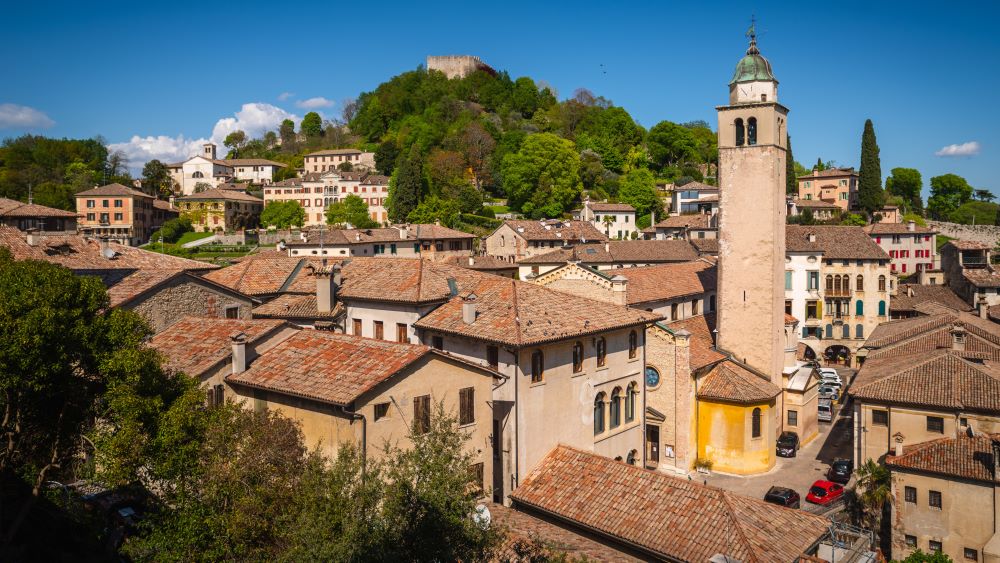
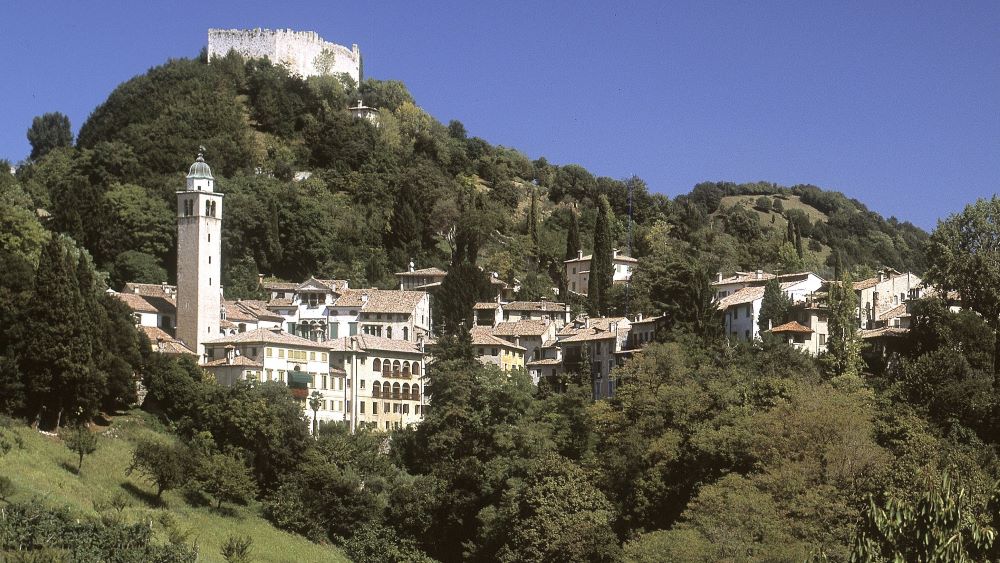
Thanks to its favourable location and pleasant climate, Asolo has been inhabited since prehistoric times, later becoming an important settlement of the Ancient Veneti. Known as Acelum in Roman times, Asolo experienced significant expansion throughout this period. The city, which was also designated a municipium, underwent substantial growth between the 1st century BC and the 1st century AD.Having already become an important Christian centre by the 6th century, between the 11th and 14th centuries, Asolo subsequently underwent the hegemony of various dominions, finally becoming part of the Venetian Republic. From the end of the 14th century, during the Venetian domination, the city entered a period of great splendour. In 1489, Venice invested Caterina Cornaro with the Lordship of Asolo, inspiring her to establish a lavish Renaissance court that left an indelible mark on the city’s art and values. In 1797, Napoleon also entered the city. During the 19th century, whilst under Austrian control, Asolo underwent reforms to its civil institutions and a programme of public works. Finally, in 1866, it became part of the Kingdom of Italy.
City itinerary
The ideal starting point for a tour is the Fontanella Zen (the Zen Fountain), a small water basin built by the Zen family in 1571 under agreement with the city council. Then you can enter the historic centre through Via Browning, which is characterised by an arcade and numerous villas and historic houses. At this point, you arrive at the town’s true core. You will probably first notice Palazzo della Ragione (the Reason Palace), now home to the local Civic Museum, which was built in the 15th century to accommodate minor Venetian representatives and the Podestà in his role as administrator.
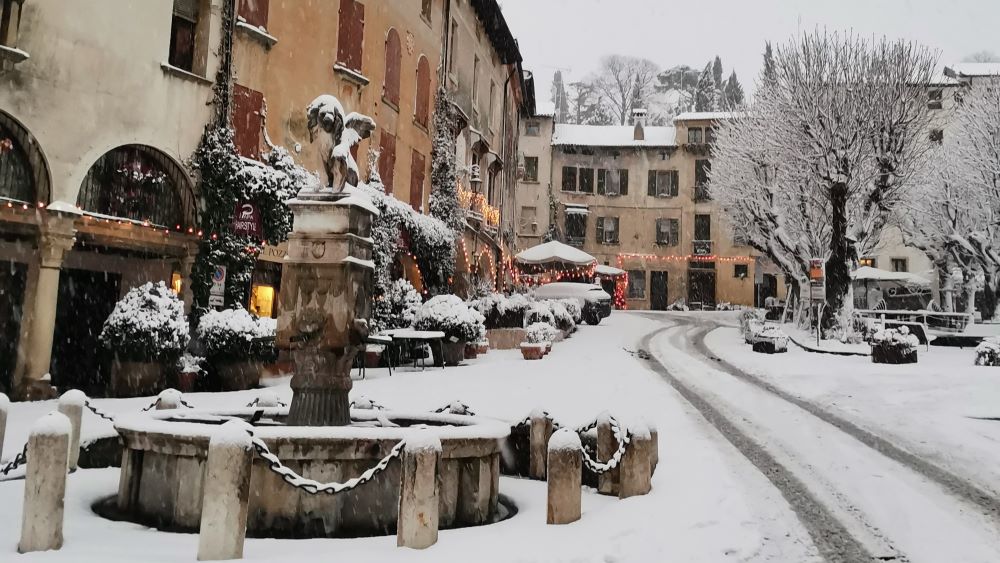
Not far away is the Fontana Maggiore (the Greater Fountain), the ideal centre of the town and a tangible solution to centuries-old problems experienced by the people of Asolo in their search for a water supply. To the left, in a lowered position, stands the Cathedral, which was built on pre-existing Roman remains and remodelled in 1747 to a project by Giorgio Massari. Inside, you can admire the beautiful altarpiece by Lorenzo Lotto dedicated to the Assumption.
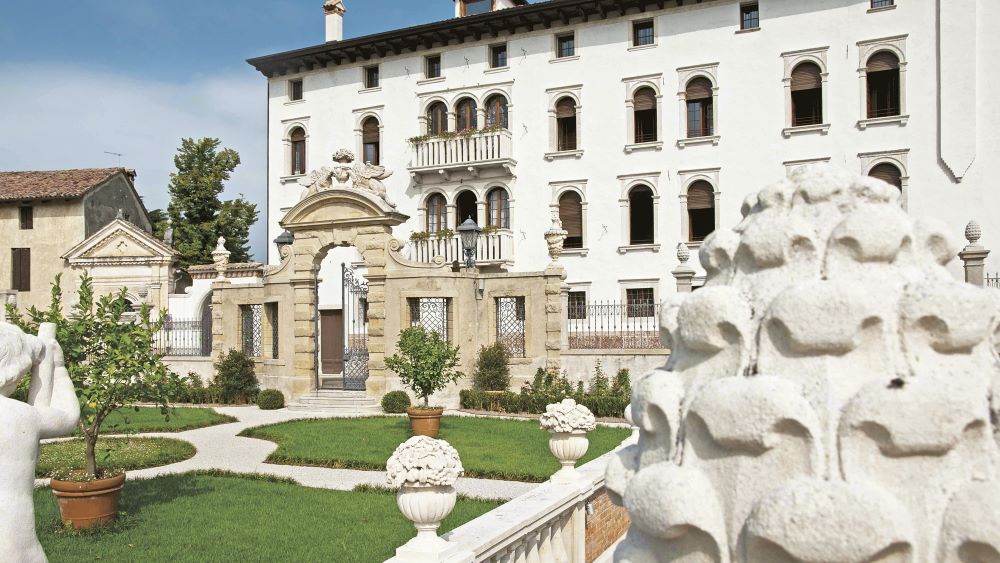
As you walk up Via Regina Cornaro, you will see some prestigious and pleasant Asolo houses. Some of these have hosted illustrious personalities who fell in love with the town’s atmosphere. At the end of the street stands the imposing Castle, a massive, ancient structure that was once the residence of Caterina Cornaro. The two remaining towers are worth a visit: the Torre Reata (the Reata Tower), which has an external staircase, and the Torre Civica (the Civic Tower), which was formerly a prison. The tour then continues to Palazzo Beltramini, an 18th-century palace that now houses the town hall.
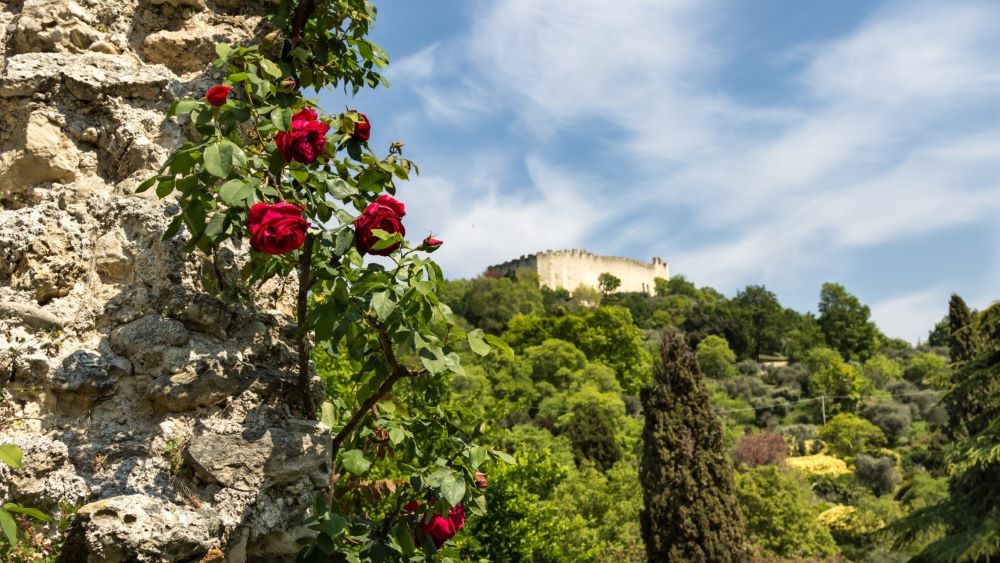
Proceeding from this point, you may take the right-hand path towards Via Dante, and subsequently ascend towards Via Collegio, where you will arrive at the Convento dei SS. Pietro e Paolo (the Convent of Saints Peter and Paul), erected in the 17th century and formerly home to a Benedictine monastery until 1807. Next, you exit through the Porta del Col Mariòn (the Col Mariòn Gate), the only gate that has preserved its medieval features. From there, you can ascend the cobbled road, which runs alongside a part of the Carraresi-Venetian walls, to the Rocca, which presents a single tower to the east. This building, which dominates the Asolo landscape and offers a spectacular view of the historic centre and the surrounding foothills, is a symbol of the city. The irregularly shaped structure dates back to the late 12th or early 13th century, but the first settlement can be traced back to the 10th or 11th century. You can then retrace your steps, descending again towards the centre for a final glimpse of the numerous historical buildings or to stop in one of the town’s many cafés.
Finally, you can leave the town from Via Bembo, following the walls until you reach Porta Dieda (Dieda Gate), where you can rejoin the route at Porta Loreggia (Loreggia Gate).
Places of Interest
To display all the landmarks in the Municipality of Asolo, go to the dedicated page and filter the results according to your needs.