![[citta murate veneto] Logo Trasp](https://cittamurateveneto.it/wp-content/uploads/elementor/thumbs/citta-murate-veneto-Logo-Trasp-q81hfxb660cjerdzpkmz2g2efhtngv5ypmrebvdwvk.png "[citta murate veneto] Logo Trasp")
![[citta murate veneto] Logo Trasp](https://cittamurateveneto.it/wp-content/uploads/2023/06/citta-murate-veneto-Logo-Trasp-300x300.png)

Camposampiero
Municipality
Piazza Castello, 35
Camposampiero (PD) – 35012
Where to stamp the ‘Lasciapassare’ included in your ‘Traveller’s Kit’.
Tourist information office
Historical overview
Camposampiero certainly dates back to Roman times, as the area was occupied by a centurial grid known as the ‘Graticolato’. The construction of the castle, complete with its two towers, is thought to date back to the first half of the 11th century, when Tiso I received Camposampiero as a fief from Emperor Arrigo II, with its defences being consolidated in 1229. In 1405, Venice took control of the city, which continued to fulfil military functions and was assigned a Venetian vicar to emphasise its strategic, civil and administrative importance, as it encompassed 33 villas. In 1513, the armies of the League of Cambrai advanced on Camposampiero, inflicting further destruction. The decline of the walls was slower; the gate known as Porta Padova still existed in 1657, and the bridge and gate leading into the fortress were still present in 1700. It was not until 1841 that the last section of the walls was demolished.
City itinerary
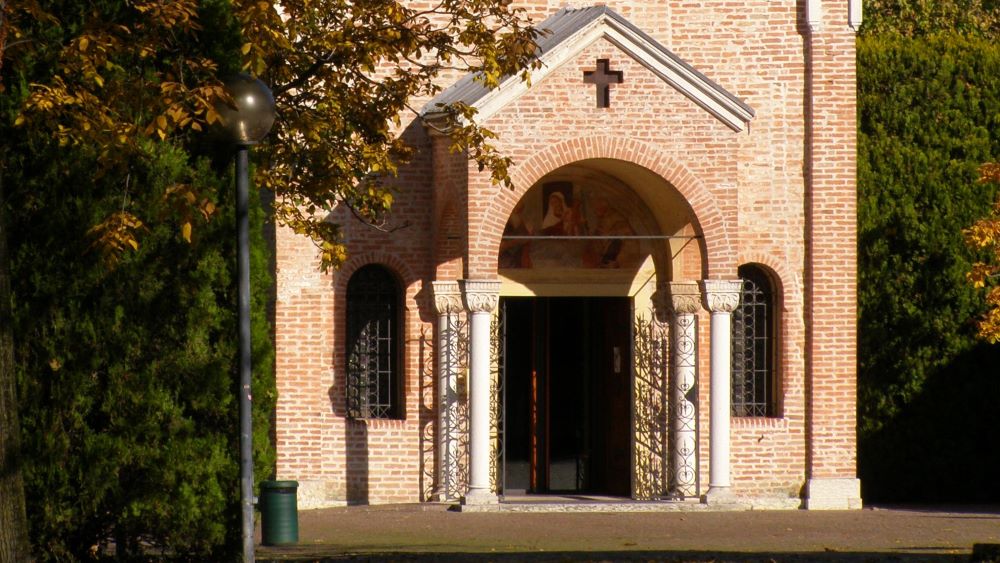
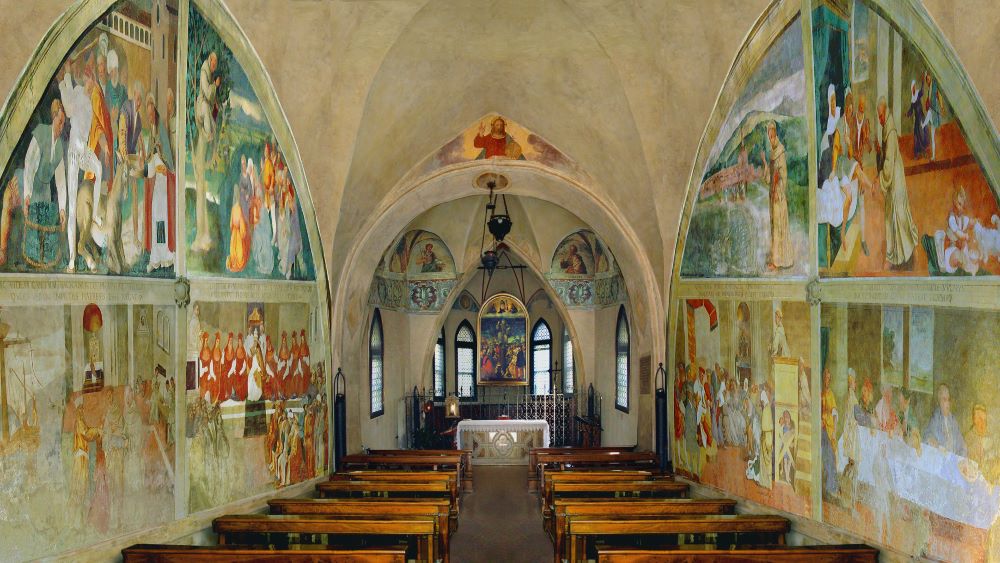
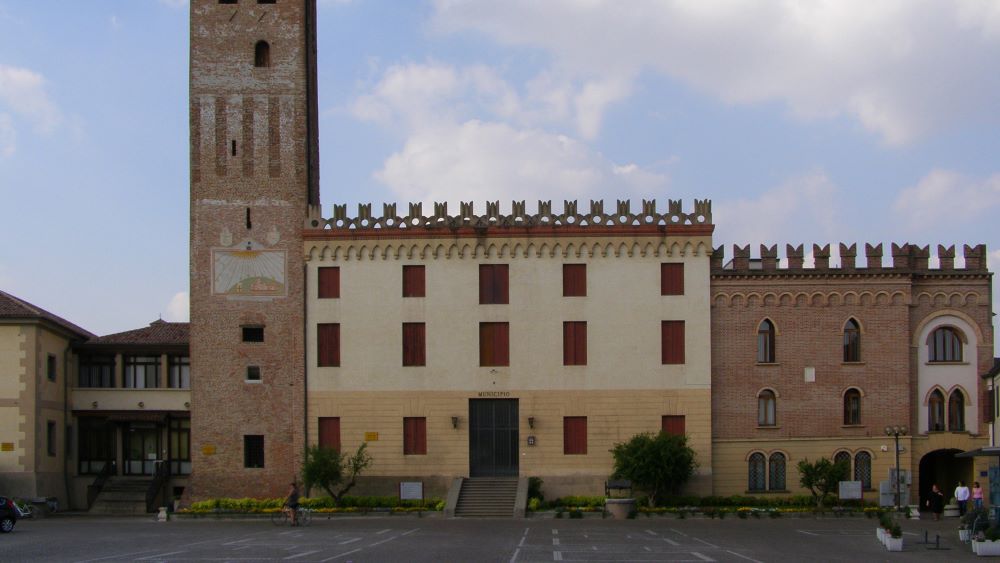
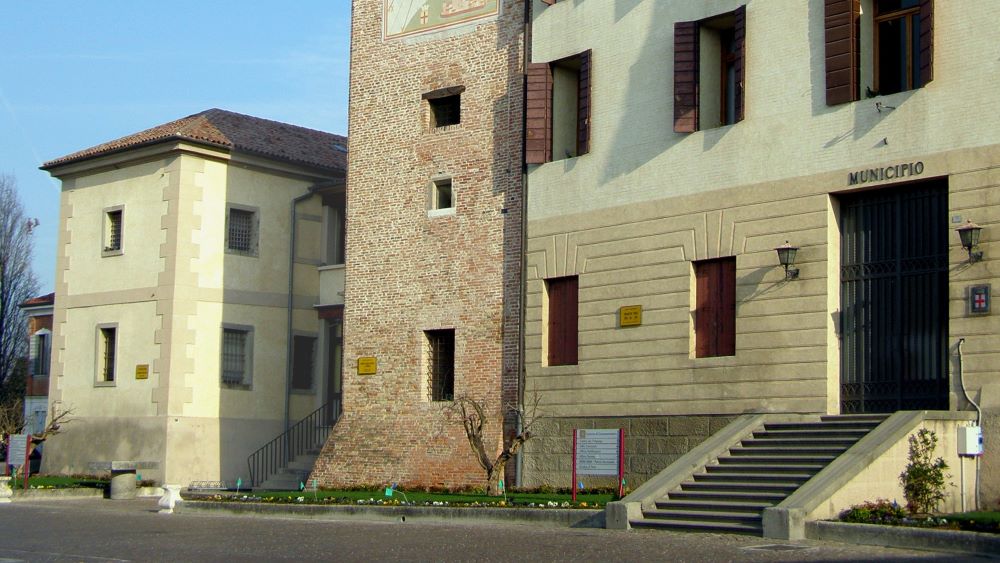
Today, only two towers remain of the city walls, but their structure can still be identified in the layout of the existing moats. When approaching from the south along the ‘del Santo’ state road, the entrance to the city is dominated by the Clock Tower of Porta Padova. Continue to the central Piazza Castello (the Castello Square), where there is a large car park in the adjacent Campo Marzio. Here stands the Rocca, which was commissioned by Tiso I and is now used as the town hall and magistrate’s court. Next to it is the tall Torre del Castello (the Castle’s Tower). Leave the square heading north, crossing Via S. Antonio after the fork of the Vandura river, which surrounds the town. St. Anthony’s visit in 1231 is commemorated by the Cella della Visione (lit. the Cell of the Vision), which is incorporated into the Chiesa di S. Giovanni Battista dei Frati Minori (the Church of St. John the Baptist of the Friars Minor). Further north is the Santuario del Noce (lit. the Sanctuary of the Hickory), dating back to 1432, which houses frescoes by Girolamo Tessari, known as ‘dal Santo’. Return to the river fork and follow the northern branch along Via S. Antonio to the junction with the Tergolino and Muson rivers. Follow Via Cordenons along the eastern edge of the town, which is defended by three parallel waterways, to reach Villa Querini, home to the Civic Library, and Villa Campello, which is currently undergoing restoration. The fortified system of the Serraglio is also worth noting: Francesco il Vecchio da Carrara had it built at the end of the 14th century by raising a mighty embankment and building continuous defences along the Paduan bank of the Muson river. This was done to connect the strongholds of Camposampiero, Stigliano and Mirano.
Places of Interest
To display all the landmarks in the Municipality of Camposampiero, go to the dedicated page and filter the results according to your needs.