![[citta murate veneto] Logo Trasp](https://cittamurateveneto.it/wp-content/uploads/elementor/thumbs/citta-murate-veneto-Logo-Trasp-q81hfxb660cjerdzpkmz2g2efhtngv5ypmrebvdwvk.png "[citta murate veneto] Logo Trasp")
![[citta murate veneto] Logo Trasp](https://cittamurateveneto.it/wp-content/uploads/2023/06/citta-murate-veneto-Logo-Trasp-300x300.png)

Este
Municipality
Piazza Maggiore, 6
Este (PD) – 35042
Where to stamp the ‘Lasciapassare’ included in your ‘Traveller’s Kit’.
Tourist information office
Via G. Negri, 9
Historical overview
The ancient city of Ateste, now known as Este, was the most populous settlement of the Venetic civilisation, which settled along the Adige River during the 10th century BC. Thanks to its strategic position between Etruria and Europe, it became a religious and commercial centre, and a Roman colony after the Battle of Actium in 31 BC. Important consular roads and neighbourhoods are still visible today. The great river’s flooding in 586 AD marked a decisive decline, transforming the city into an agricultural centre. The city’s rebirth is attributed to Azzo II, a marquess with German origins, who constructed the initial defensive castle, which was severely damaged by Ezzelino da Romano in 1249. At the end of the 13th century, Padua expelled the Este family and razed the walled city to the ground. Ubertino da Carrara then rebuilt the walls and towers, which can still be visited today. The Atestino National Museum, which houses artifacts from the Paleovenetian civilisation, is located in the 16th-century Palazzo dei Mocenigo (lit. Mocenigo Palace), which incorporates ancient Carrara walls.
City itinerary
Medieval urban itinerary in Este (PD): On the Trail of the Middle Ages
Discover Este through a route that showcases its medieval heritage, including walls, towers, churches, and historic buildings.
Chiesa di San Martino (lit. Church of St. Martin), 11th-13th-17th centuries:
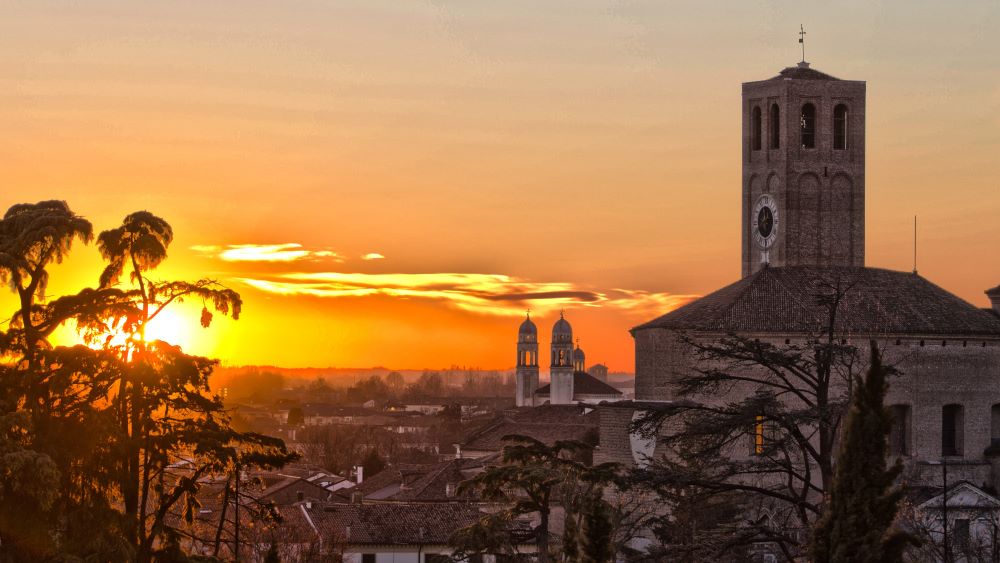
The oldest religious building in Este, it has been documented since the 11th century. The structure is in the Romanesque style, with subsequent modifications. The bell tower has been leaning since the 14th century, making it an iconic feature. Inside, you will find a Baroque altar by Bonazza, Giotto-style frescoes, and a triptych depicting the Madonna with other saints.
Castello Carrarese (lit. Carrarese Castle), 14th century:
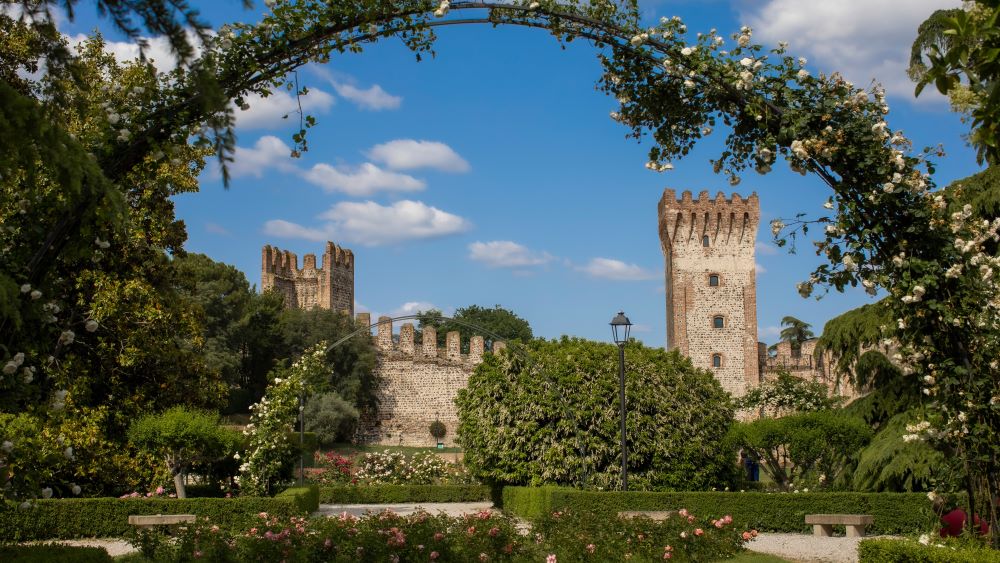
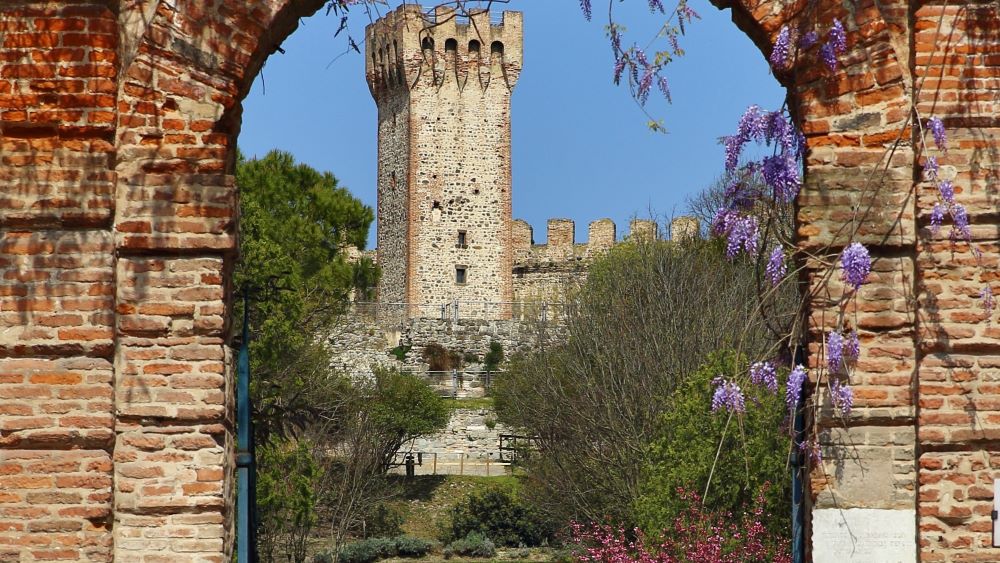
Ubertino da Carrara rebuilt its walls in 1339-40 on the ruins of the previous castle, which dates back to 1056 and was built at the behest of Alberto Azzo d’Este. The castle is a fortified square with twelve small towers, a donjon dominating the hill, and the Castelletto del Soccorso — or Torre del Soccorso — (lit. Castle — or Tower — of the Rescue), which was the preferred entrance for the Lords of Padua. Inside, the majestic historic public gardens are rich in tree varieties and boast a centuries-old wisteria.
Summit Donjon:
Rebuilt in 1339-1340 and standing 21 metres high, it was constructed on the foundations of an 11th-century pentagonal tower. It is the only part of the original keep to survive the Carrarese-Scaligero fight. Along with the rest of the complex, it was restored in the 1990s.
Castelletto del Soccorso Complex:
Consisting of fortified rooms with a defensive function, it features a courtyard, a side tower and the main keep. The 29-metre-high Torre del Soccorso offers panoramic views of Este, Monte Murale and Monselice.
Palazzo Scaligero del Capitano (lit. Captain’s Scaliger Palace), 14th century:
A Gothic building overlooking the main square that was originally the seat of the Scaligero governor.
Santuario Basilica di Santa Maria delle Grazie (lit. Holy Mary of the Grace’s Sanctuary), 15th-18th century:
Built in the 15th century to house the miraculous Byzantine painting of Our Lady of Graces, it was rebuilt in 1717, whereas the bell tower and the dome date back to the 19th century. It was donated to the parish of San Martino by the Republic of Venice in 1770 and elevated to the status of basilica in 1924 by Pius XI.
Complesso Monumentale di San Francesco (lit. Monumental Complex of St. Francis), 15th-18th centuries:
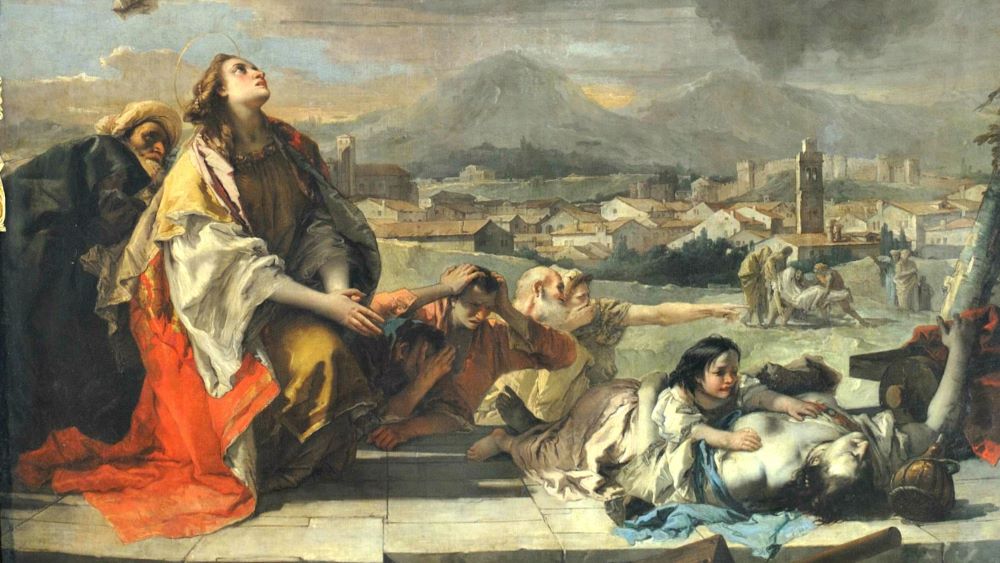
It consists of the former Church of St. Francis, which was originally built on the site of the 13th-century Church of the Holy Mary. It has a nave and three apses and contains the tombs of Taddeo and Bertoldo d’Este (1464). The complex also includes the former Oratories of the Battuti and of the Holy Spirit, as well as the Convent of St. Francis, which dates back to before 1238. Restored in the 17th century, it is now used as a school and association headquarters. It is also worth mentioning the opportunity to visit the Duomo Abbaziale di Santa Tecla (lit. Abbey Cathedral of St. Tecla), even though it dates back to a different period. Built on the ruins of an early Christian church that was destroyed in the 1688 earthquake, the cathedral’s origins date back to the 4th or 5th century AD, when it was built on the site of an ancient pagan temple. The Baroque reconstruction (1690–1702) is based on a design by Antonio Gaspari and has an oval plan and unique oblique architecture. The original design for the façade included marble and statues, but it was never completed. Internally, the Cathedral houses G. B. Tiepolo’s most beautiful religious masterpiece (1759): an altarpiece depicting St. Tecla interceding with the Eternal Father to save the city from the plague. This was placed in the apse on 24 December 1759, in the presence of the artist and his son. The restoration was completed in 2020 to celebrate the 250th anniversary of his death. A model of the work is kept at the Metropolitan Museum of Art in New York. Another artistic treasure is the Triumph of the Eucharist, a sculptural group by Antonio Corradini. There are also works by Grigoletti, Zanchi and Amigoni. Beneath an altar lies the incorrupt body of Blessed Beatrice I d’Este, the city’s second patron saint.
Places of Interest
To display all the landmarks in the Municipality of Este, go to the dedicated page and filter the results according to your needs.