![[citta murate veneto] Logo Trasp](https://cittamurateveneto.it/wp-content/uploads/elementor/thumbs/citta-murate-veneto-Logo-Trasp-q81hfxb660cjerdzpkmz2g2efhtngv5ypmrebvdwvk.png "[citta murate veneto] Logo Trasp")
![[citta murate veneto] Logo Trasp](https://cittamurateveneto.it/wp-content/uploads/2023/06/citta-murate-veneto-Logo-Trasp-300x300.png)

San Zenone degli Ezzelini
Municipality
Via Roma n. 1
S. Zenone D. Ezzelini (VI) – 31020
Luogo di timbratura del Lasciapassare incluso nel kit “Viaggio nel tempo”:
Biblioteca comunale
Via Teresa Rubelli, 2
Bar Centrale di De Marchi Graziella e C. Snc
via Roma, 25


Historical overview
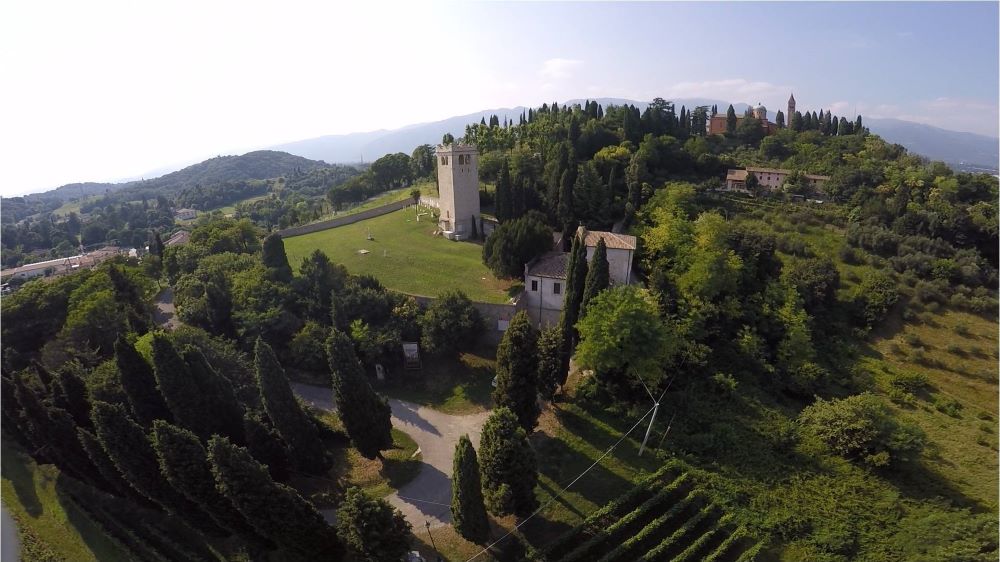
The Castrum of San Zenone is mentioned in 1152, in a bull issued by Eugene II, among the possessions of the Bishop of Treviso, to whom belonged the plebem S.Zenonis cum medietate castri et pertinentiis suis (lit. the parish church of San Zenone with half of the castle and its appliances). In 1036, Ecelo, progenitor of the Ezzelini family, arrived in Italy in the retinue of Emperor Conrad the Salian and was assigned the fiefdom of San Zenone. It was here, on Colle Castellaro (lit. Castellaro Hill), that his descendant Ezzelino III da Romano built a majestic fortress. Following Ezzelino III da Romano’s death in Soncino in 1259, his brother Alberico took refuge in the castle with his family. After months under siege by the people of Treviso, Vicenza and Padua, they were all brutally murdered. Subsequently, orders were given to destroy the fortress and the town below. The castle was rebuilt in 1327 and the Municipality of Treviso confirmed Odorico Bonaparte’s rights to it until it was demolished by the Venetian Republic in 1340. Only a few remains are left today, which were uncovered during excavations in 1993.
City itinerary
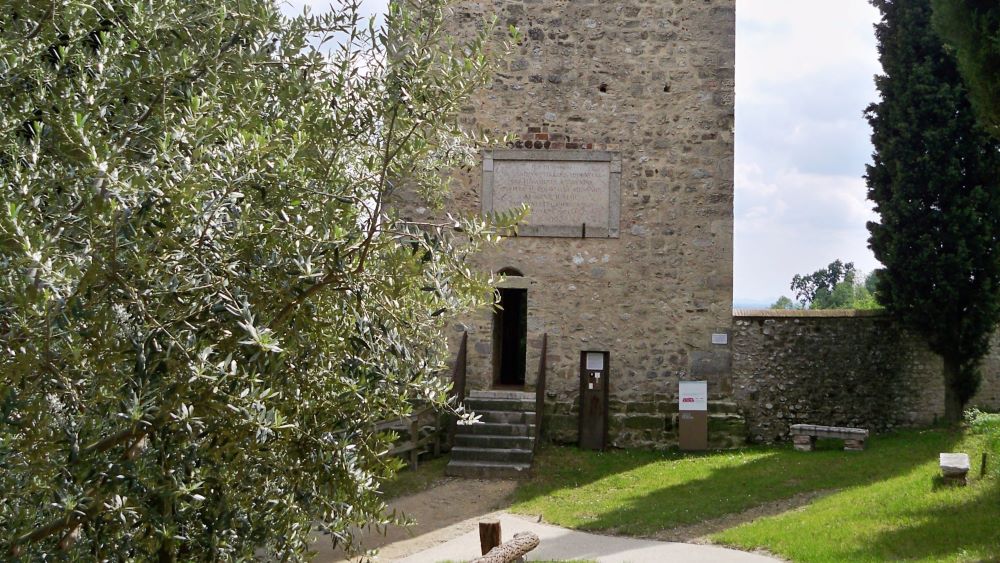
The municipality’s name is inextricably linked to the Ezzelini dynasty, which came to an end with their massacre in 1260 at the Castle of San Zenone. The itinerary begins at the foot of Colle Castellaro, home to Villa Marini Rubelli, which dates back to the end of the 15th century. Originally the country residence of Venetian nobleman Teodoro Senachi and his wife Quieta Marini, and later of Francesco and Teresa Rubelli, the villa was purchased by the municipality of San Zenone degli Ezzelini in 1988 and underwent restoration work from 2009 onwards. The complex consists of a walled courtyard, a manor house to the north (which currently hosts art exhibitions and cultural events), a barchessa (a colonnade) to the east (which is now home to the Biblioteca Municipale and the Gipsoteca Francesco Rebesco — lit. the Municipal Library and the Francesco Rebesco plaster cast gallery), and finally a noble chapel dedicated to the Madonna del Carmine (the Virgin of Carmel) in the south-east corner dating back to 1753. Continuing along Via Castellaro, you will reach the complex of the Antica Pieve (lit. the Ancient Parish Church), which is enclosed by a wall together with the Torre Campanaria (lit. the Bell Tower) and the Antico Cimitero (the Ancient Cemetery). The tomb of the painter Noè Bordignon (1841–1920), his wife Maria Zanchi and their son Lazzarino is located here, as are the remains of 89 victims of the First World War. A plaque on the northern façade of the Torre Campanaria bears the verses of Carlo Leoni in memory of the Ezzelini massacre: IRA DI POPOLI / DA VENTENNE STRAZIO ADDENSATA / QUI FIERAMENTE ROMPENDO / SPERPERO’ IL COVO ALLA TIRANNIDE / NE SPENSE IL SEME / PARI VENDETTA IMPRECANDO / A CHI OSASSE IMITARLA / XXIV AGOSTO MCCLX (lit. WRATH OF THE PEOPLE / FROM TWENTY YEARS OF INTENSE TORMENT / PROUDLY BREAKING / IT DESTROYED THE LAIR OF TYRANNY / IT EXTINGUISHED ITS SEED / SWEARING EQUAL VENGEANCE / ON THOSE WHO DARED TO IMITATE IT / 24 AUGUST 1260). The Antica Pieve, dedicated to St. Zenone, was consecrated in 1462 by the Bishop of Treviso and housed the tombs of priests and noble families. Having been enlarged over the years, the church was demolished after the new church in the city centre was consecrated in 1871. The only remaining parts of the original building are the presbytery, which was once a cemetery chapel dedicated to St. Veneranda, and the medieval crypt, which dates back to before 1152. At the top of Colle Castellaro stands the Santuario della Madonna del Monte (lit. the Sanctuary of the Madonna del Monte), dedicated to Our Lady of Health, with a wooden statue of the Virgin Mary dominating the altar. The origins of the sanctuary, known as the ‘chiesa rossa’ (lit. the ‘red church’) due to the colour of its exterior, are linked to the Ezzelini family, when it served as the castle’s church. After being damaged by two earthquakes in 1695 and 1836, the church was demolished and rebuilt in its current form between 1890 and 1891, also thanks to the help of the local population. Its frescoes were painted by Noè Bordignon (1841–1920), whose Giudizio Universale (the Last Judgement) also decorates the current Chiesa Parrocchiale (lit. the Parish Church). The sculptures are the work of Francesco Rebesco (1897–1985). At the foot of the Santuario’s bell tower, you can see the remains of the Castle keep, which were uncovered during excavations in 1993.
Places of Interest
Per visualizzare tutti i luoghi di interesse del Comune di San Zenone degli Ezzelini accedi alla pagina dedicata e filtra i risultati secondo le tue esigenze.