![[citta murate veneto] Logo Trasp](https://cittamurateveneto.it/wp-content/uploads/elementor/thumbs/citta-murate-veneto-Logo-Trasp-q81hfxb660cjerdzpkmz2g2efhtngv5ypmrebvdwvk.png "[citta murate veneto] Logo Trasp")
![[citta murate veneto] Logo Trasp](https://cittamurateveneto.it/wp-content/uploads/2023/06/citta-murate-veneto-Logo-Trasp-300x300.png)

Montagnana
Municipality
Via Carrarese, 14
Montagnana (PD) – 35044
Luogo di timbratura del Lasciapassare incluso nel kit “Viaggio nel tempo”:
Tourist information office
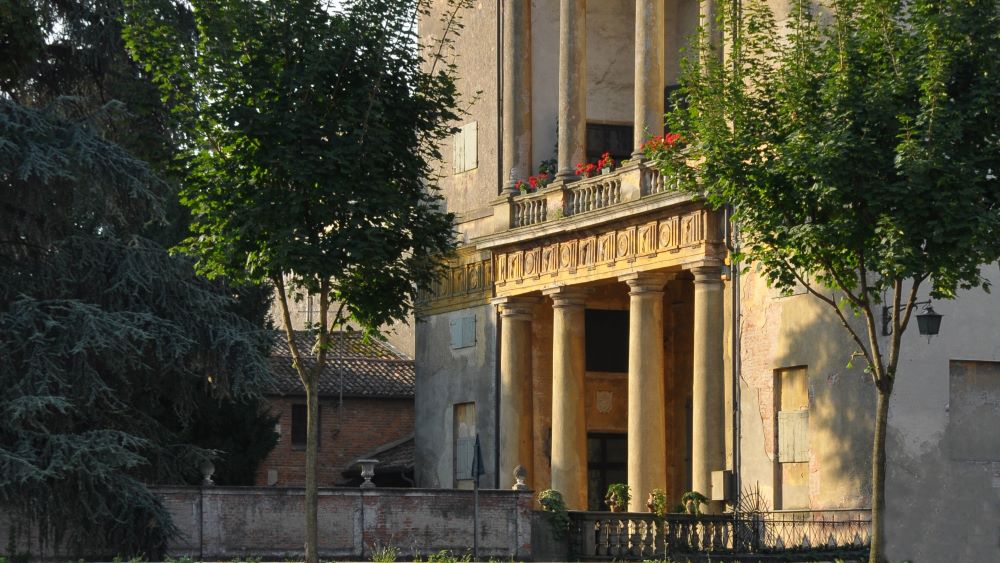
Historical overview
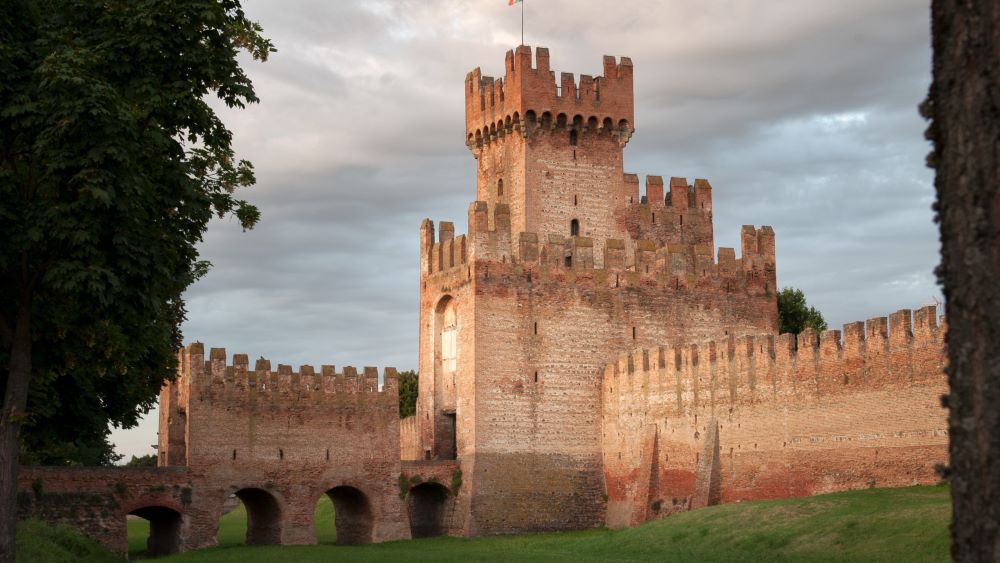
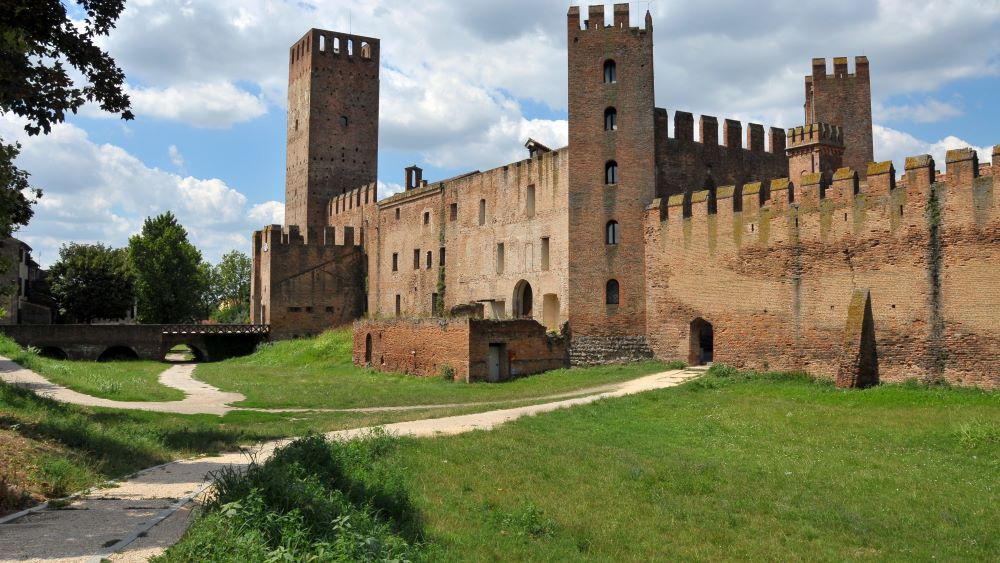
Montagnana owes its city walls to the Da Carrara family, although legend inextricably links its name with that of Ezzelino III da Romano. In 1242, he attacked and destroyed the city by setting it on fire, subsequently beginning its reconstruction by building the donjon of Castel San Zeno (lit. the Castle of St. Zeno). The walls’ construction continued under the supervision of the Municipality of Padua, which, in 1275, built the sections of wall adjacent to the Rocca degli Alberi (lit. the Fortress of the Trees) and to Castel San Zeno, both of which were made entirely of bricks and didn’t feature any walkways. The remaining sections were built between 1342 and 1362 by the Da Carrara family, alternating layers of bricks and stones of trachyte taken from the Euganean Hills. Francesco the Older Da Carrara commissioned Franceschino de’ Schici to build the Rocca degli Alberi complex. In 1405, the city pledged its allegiance to Venice, whose influence endured, albeit with varying fortunes, until the Republic’s downfall.
City itinerary
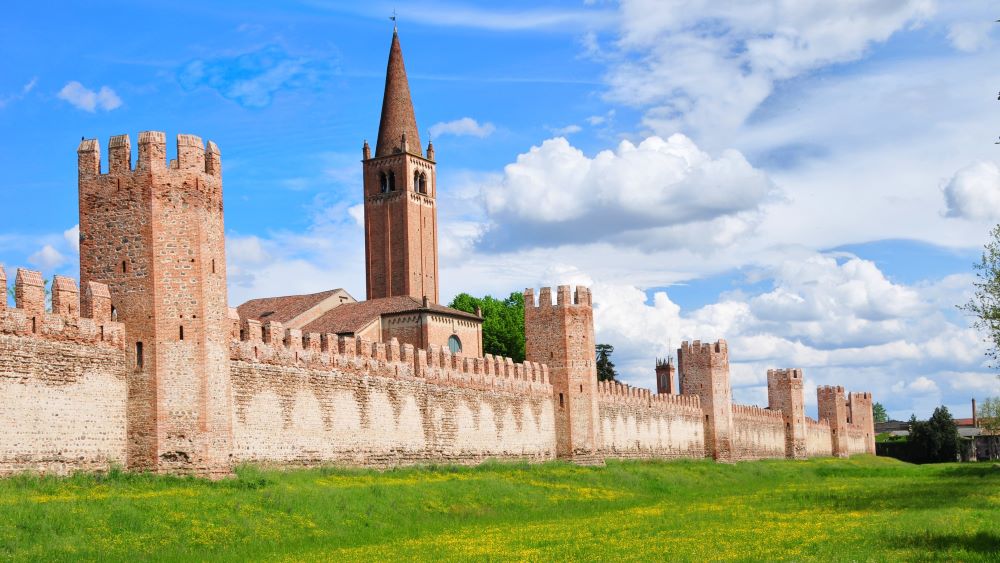
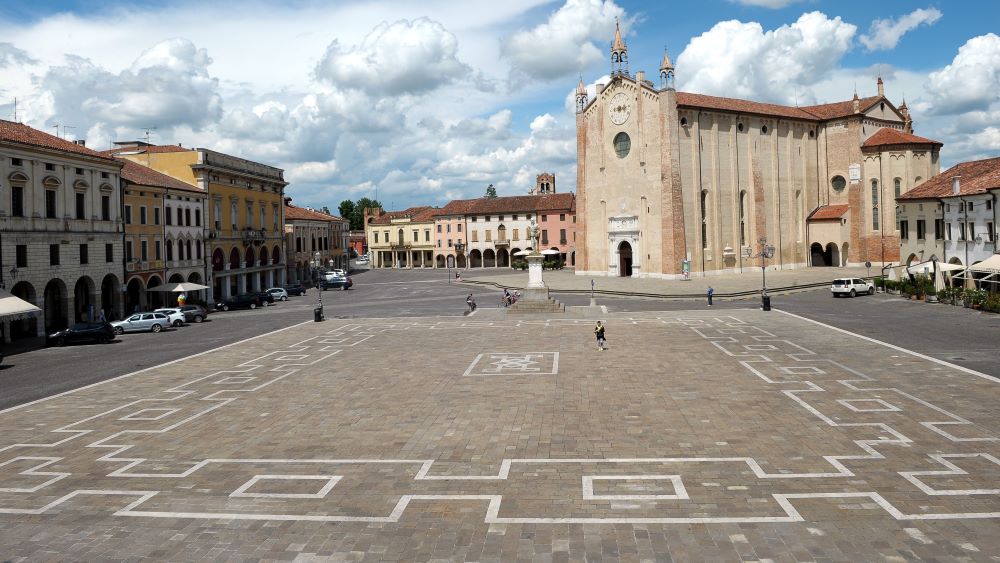
The city’s structure, which is an extraordinary example of a well-preserved walled town, can be appreciated from the outside with a short anti-clockwise tour. The approximately two-kilometre-long, irregularly rectangular walls, which are crowned with Guelph-style merlons and interspersed with 24 semi-hexagonal towers, are surrounded by an embankment with a moat. There are two original entrances, one opening to the east towards Padua and the other to the west towards Legnago. The walking tour should start on the south-western side of the walls, near Porta XX Settembre (lit. September 20th Gate), which was opened in 1885 by Camillo Boito. The route then continues along the dirt road inside the walls and leads to Porta Legnago (lit. Legnago Gate), which is dominated by the Carrarese complex of the Rocca degli Alberi. Built between 1360 and 1362, it is one of the most important and best-preserved examples of medieval military architecture. It consists of a 35-metre-high donjon, a tower and a three-section gate, preceded by two ravelins: one facing the city (now partially buried) and one overlooking the moat. Crossing it on the way out, it is possible to appreciate the complex access system consisting of two portcullises, two gates and four once-existing drawbridges. Back in the city, take the porticoed Via Matteotti (formerly Via Granda), the town’s main street. A short detour to the left on Via N. Sauro leads to the 18th-century Chiesa di San Benedetto (lit. the Church of St. Benedict), while further onwards and still on the main street, a right turn onto Via dei Montagnana will lead to Via Mure Sud, where it is possible to walk along the walls’ archivolts and to reach the rear of the medieval Chiesa di San Francesco (lit. the Church of St. Francis). Heading away from the walls, proceed along Vicolo S. Francesco to Piazza Vittorio Emanuele II (lit. Vittorio Emanuele II Square). From there, take Via Carrarese, which offers a stunning view of the imposing Castel San Zeno and Porta Padova (lit. Padua Gate). The complex is divided into three parts: the Mastio di Ezzelino (lit. Ezzelino’s Tower), the gate with two ravelins and Ezzelino’s fort, which is equipped with two diagonal corner towers and which marks the beginning of the first section of the wall to be built in the mid-13th century using only bricks. As you leave the gate, take note of Palazzo Pisani (lit. Pisani Palace), which was designed by architect Andrea Palladio. After crossing the moat, re-enter through a lateral postern gate, which leads to Piazza Trieste (lit. Trieste Square). From there, take Via Marconi to go back to the main square, where you will find the impressive cathedral with its significant paintings. Via Roma, instead, leads to Porta Vicenza (lit. Vicenza Gate), which was opened in 1504 to connect the city to the Frassine river and the province of Vicenza. We recommend ending your visit by continuing along the inner road to the right and walking along the picturesque houses, mainly built at the end of the 19th century, which are adjacent to the walls. This will take you back to Castel San Zeno.
Places of Interest
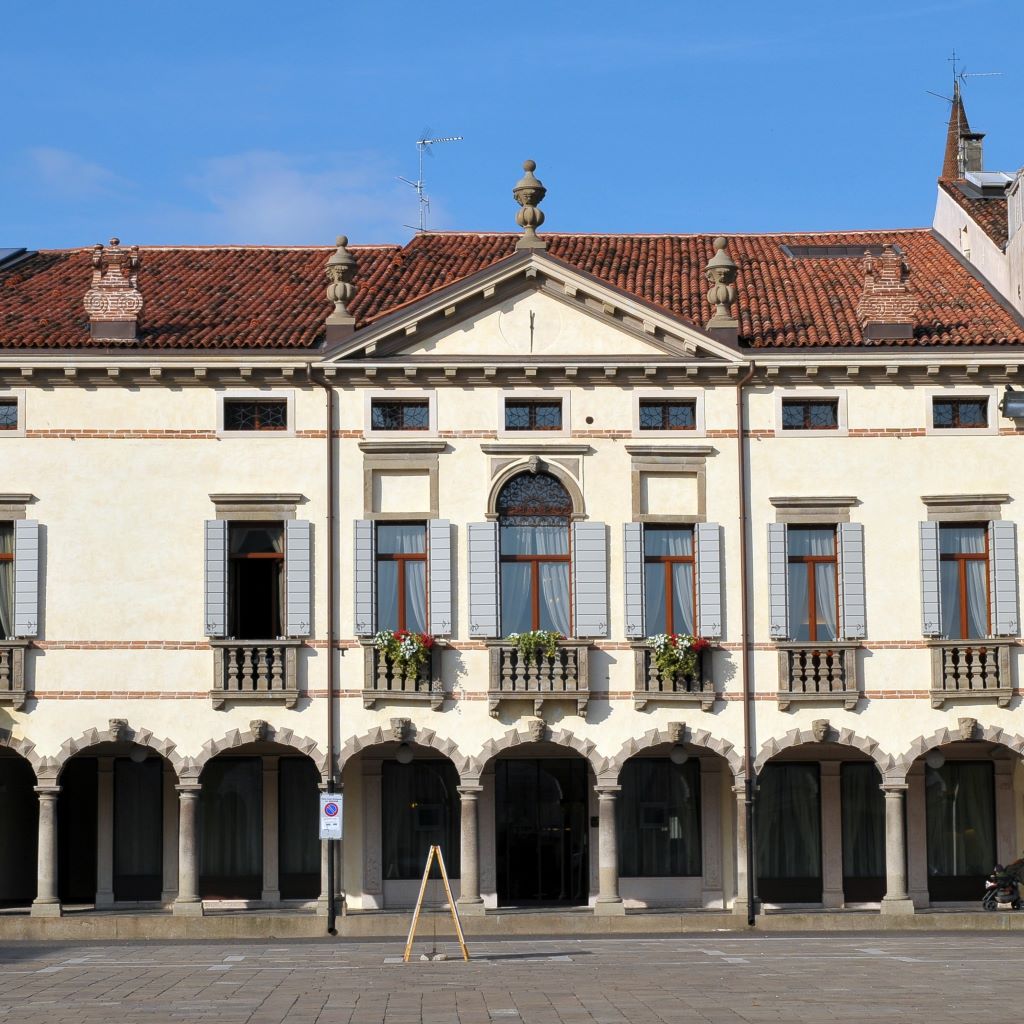
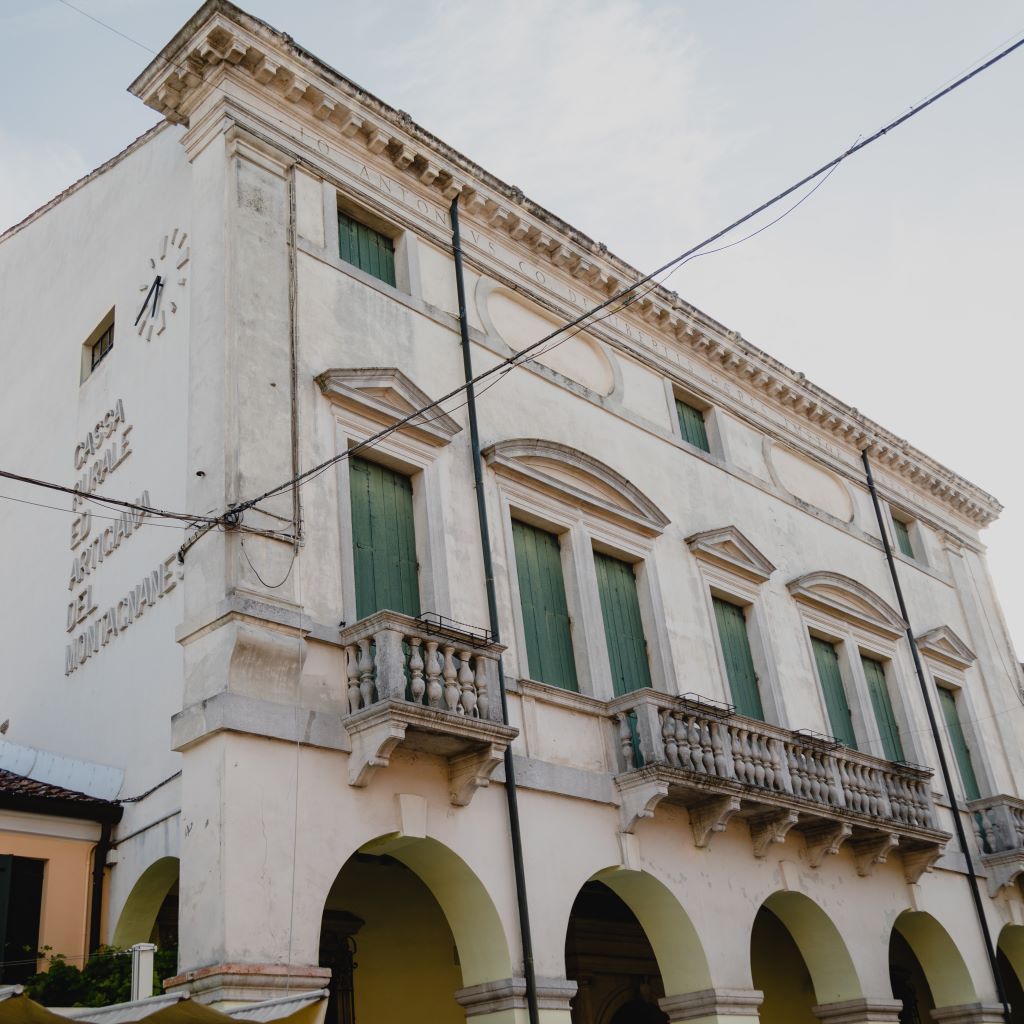
Il gusto settecentesco di Palazzo Valeri, dal profilo elegante e maestoso, si ritrova in particolare nelle nove colonne in trachite con capitelli dorici, negli otto archi bugnati con mascheroni centrali e nelle sette ampie finestre del primo piano.
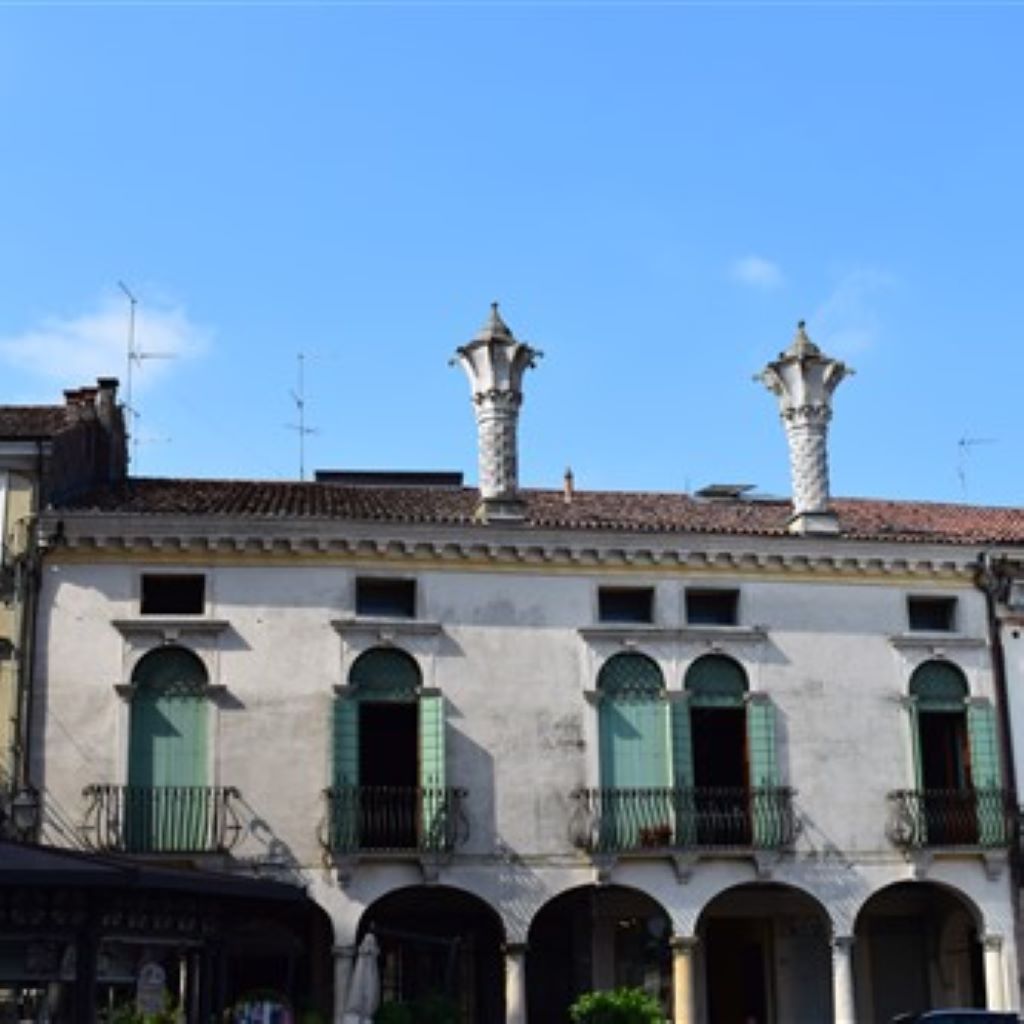
Le forme armoniche ben equilibrate e il chiaro lessico seicentesco di Palazzo Zanella sono impreziositi da due peculiari camini a corolla. Le mappe storiche testimoniano l’esistenza del palazzo già nel 1500, ma le sue suggestive cantine fanno presupporre un’origine medievale.
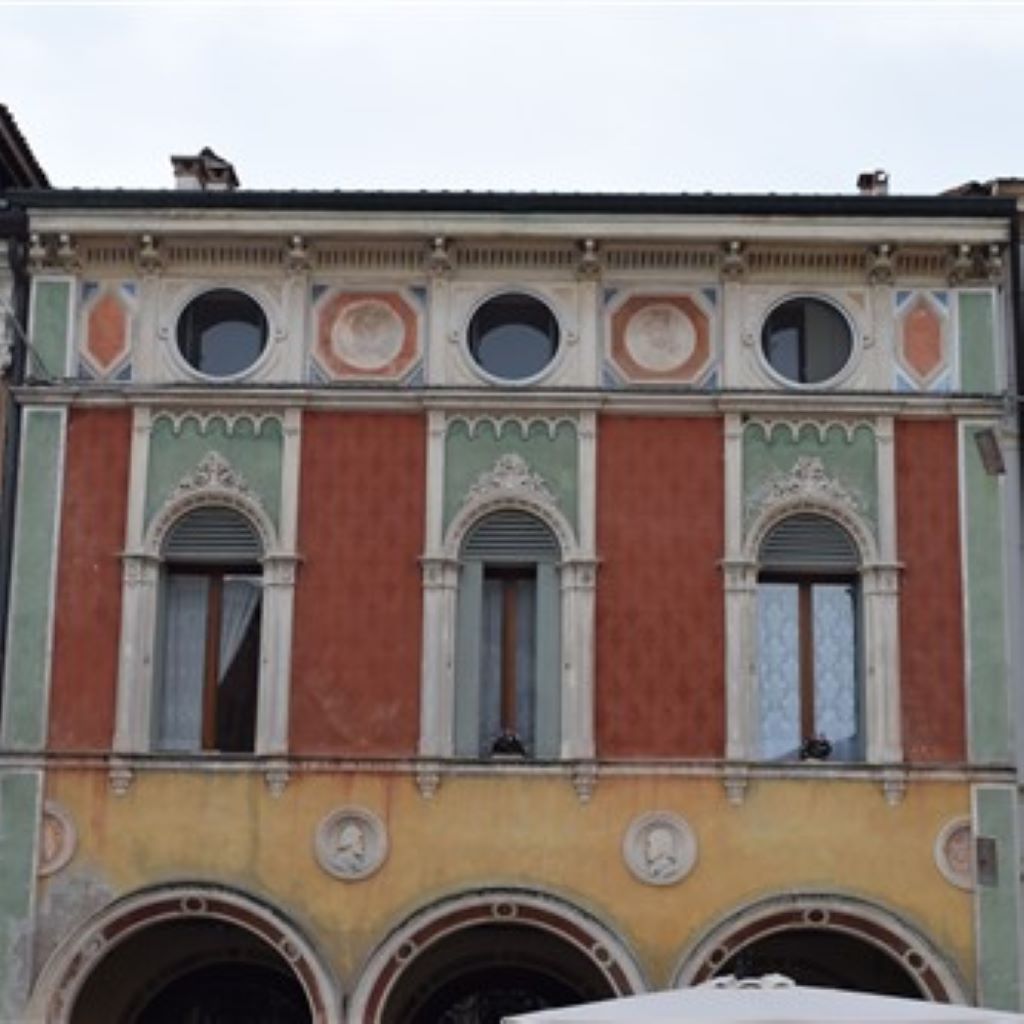
Questo palazzo ottocentesco svela gli ideali risorgimentali di Giovanni Santini, astronomo e figura di spicco dell’Università di Padova, che nel 1860 ne affidò il restauro ad Antonio Caregaro Negrin. I colori degli intonaci richiamano il tricolore, mentre i bassorilievi in facciata raffigurano Giuseppe Garibaldi e Giuseppe Mazzini.

Il Palazzo, di impianto trecentesco, presenta una facciata di stile Umbro-Toscano (tetto sporgente, travature in legno ed affreschi con stemmi nobiliari nel sottogronda). Questi elementi suggeriscono che possa trattarsi della residenza di Jacopa da Leonessa, moglie del valoroso condottiero Gattamelata (n. 1370 – m. 1443). Il pregevole e imponente stemma lapideo visibile sul portale centrale è attribuibile ai nobili Pisani. Il Palazzo è di proprietà della famiglia Pomello Chinaglia, il cui illustre antenato, il Sen. Luigi Chinaglia (1841 – 1906), partecipò alla spedizione dei Mille con Garibaldi, fu Presidente della Camera e Senatore del Regno d’Italia. Un busto con lapide commemorativa è ancora oggi visibile sotto la loggia del Municipio.
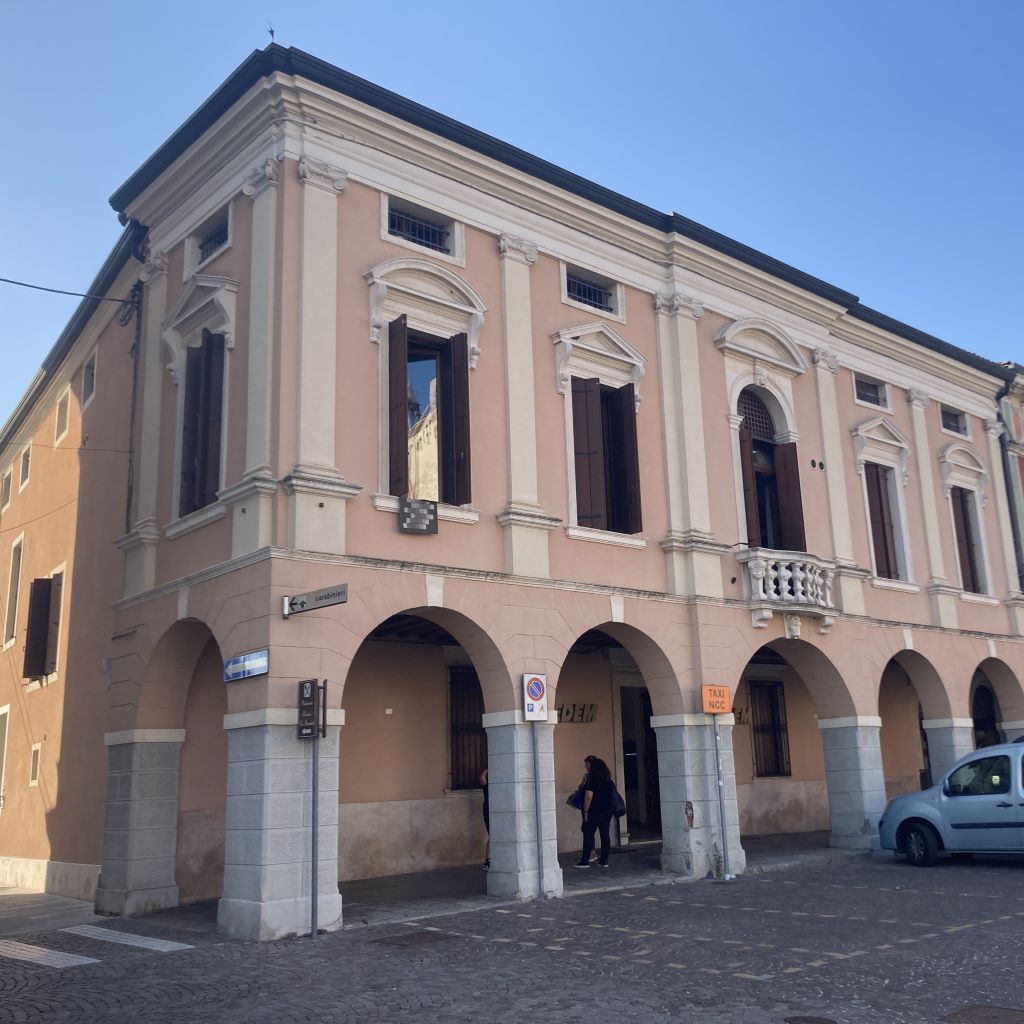
Di impianto settecentesco, il palazzo fu probabilmente rinnovato alla fine dell’Ottocento, come suggeriscono i pavimenti in terrazzo veneziano. L’interno presenta vari ambienti affrescati, alcuni dei quali in stile Liberty. Qui visse Baldassarre Faccioli, luogotenente di artiglieria che prese parte alla nota spedizione dei Mille.
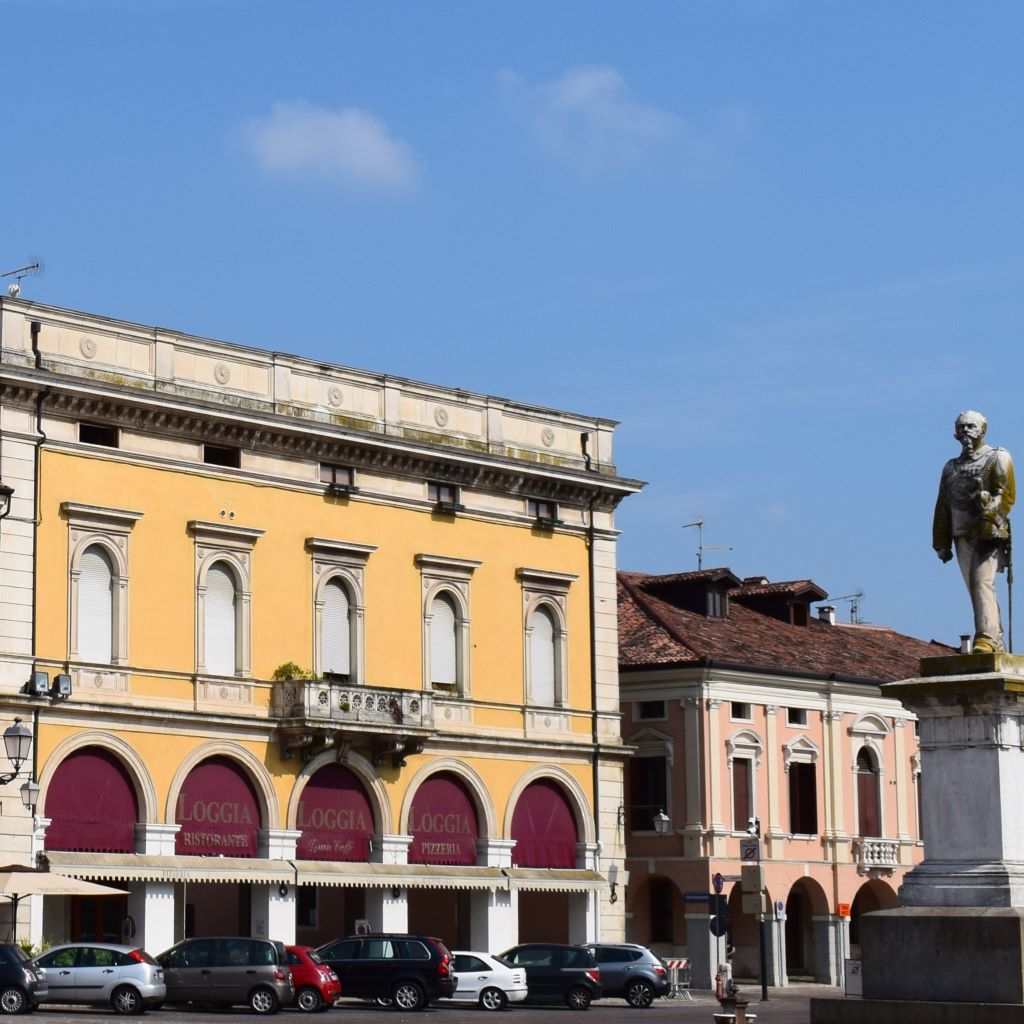
Destinato a diventare il centro della vita culturale e mondana della città, il palazzo fu eretto dal Comune nel 1877. Sotto la sua loggia si svolgeva il mercato coperto dei cereali. Pur colpito da un incendio nel 1966, non smise di ospitare in seguito importanti eventi culturali.
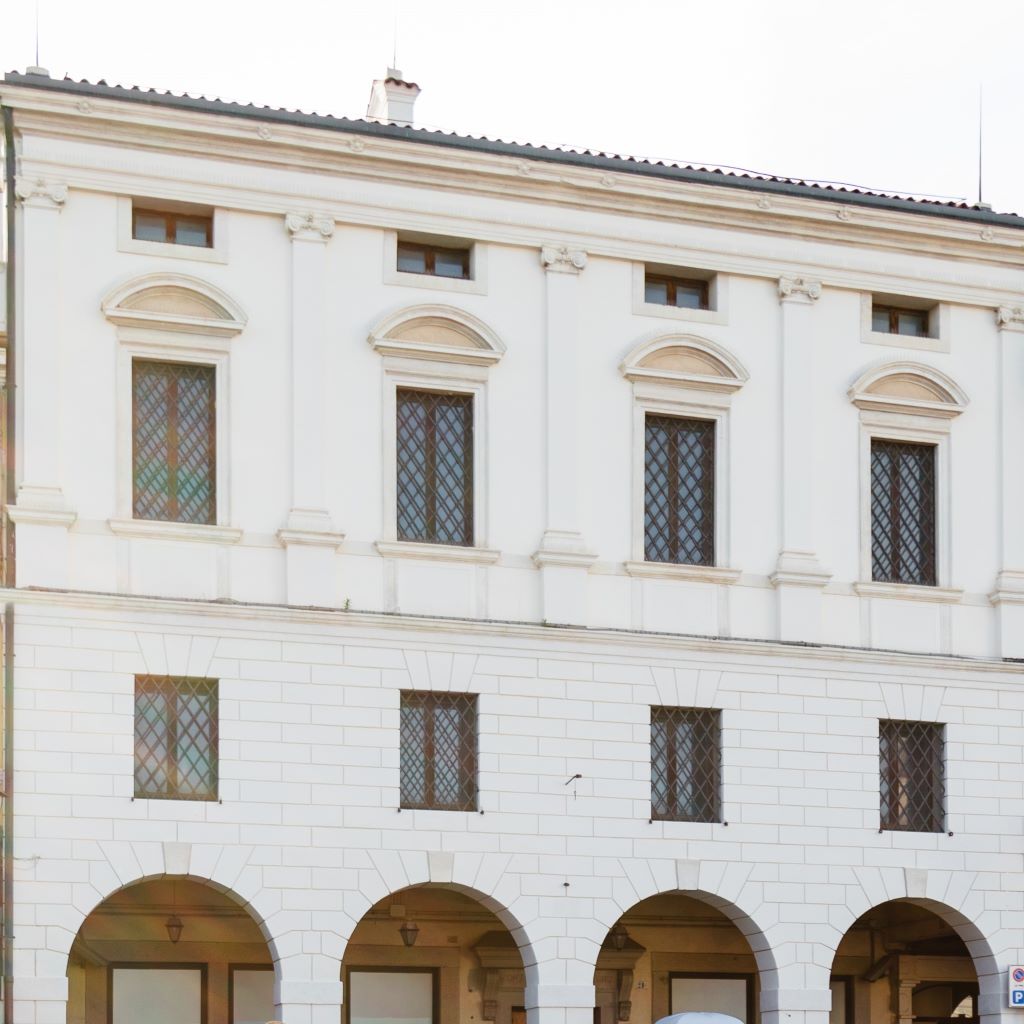
Il palazzo testimonia la storia dei Monti di Pietà, istituzione che anche a Montagnana ha prestato la sua preziosa opera fin dal 1497. Questa sede unisce due edifici contigui, appositamente acquistati nel XVI secolo. L’aspetto attuale del palazzo risale alla consistente opera di restauro del 1765.
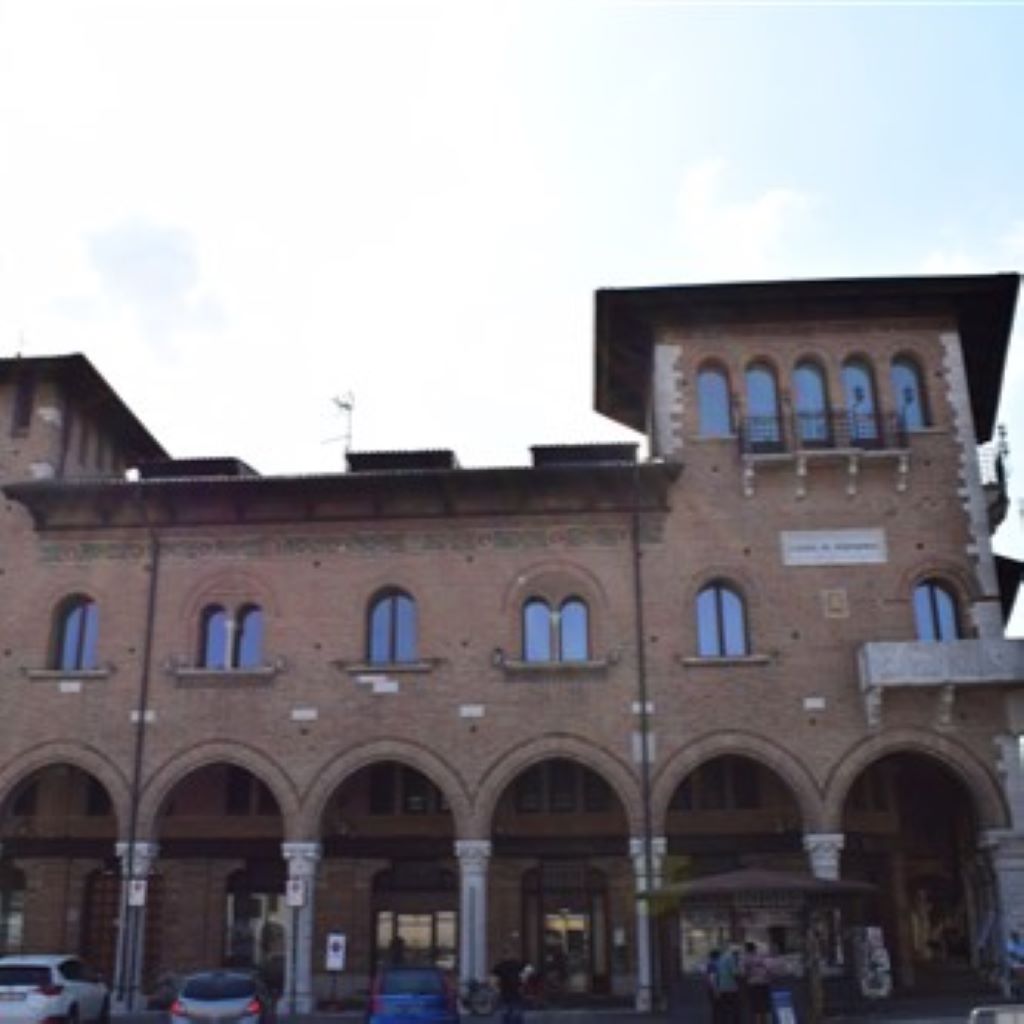
Nel 1918 un incendio distrusse le abitazioni preesistenti, quindi, tra il 1923 e il 1927, l’architetto Forlati e l’ingegnere Berlese progettarono al loro posto la sede della Cassa di Risparmio. Gli archi, le colonne, i capitelli, le decorazioni scultoree e pittoriche ricordano i più fastosi palazzi medievali.
Palazzo Uberti è una delle più importanti residenze private costruite nel Cinquecento entro le mura. Nell’Ottocento la famiglia Foratti ne affidò il restauro all’architetto Antonio Caregaro Negrin, che ne progettò anche il giardino letterario di gusto romantico.