![[citta murate veneto] Logo Trasp](https://cittamurateveneto.it/wp-content/uploads/elementor/thumbs/citta-murate-veneto-Logo-Trasp-q81hfxb660cjerdzpkmz2g2efhtngv5ypmrebvdwvk.png "[citta murate veneto] Logo Trasp")
![[citta murate veneto] Logo Trasp](https://cittamurateveneto.it/wp-content/uploads/2023/06/citta-murate-veneto-Logo-Trasp-300x300.png)

Monselice
Municipality
Piazza San Marco, 1
Monselice (PD) – 35043
Luogo di timbratura del Lasciapassare incluso nel kit “Viaggio nel tempo”:
Tourist information office
Palazzo della Loggetta, Via del Santuario, 6
Historical overview
In his work Historia Longobardorum, the historian Paolo Diacono reports that the Byzantine castrum called Mons Silicis was conquered by the Lombard king Agilulf in 602. By that time, Monselice already had a long history. Starting from a Neolithic settlement in the 4th-3rd millennium BC, it progressed through the Bronze Age (2nd millennium BC) to become a Roman castrum. Under the Lombards and Franks, it became an important military stronghold and the administration centre for a vast territory stretching from the Adige River to the Euganean Hills. In the 12th century, it became a free commune and, from 1237, it was one of the main centres of the territory dominated by Ezzelino da Romano, vicar of Emperor Frederick II of Swabia. During his rule, extensive fortification works were ordered and the town became the base for military campaigns against Padua, Este and the castles of the neighbouring lands. After being conquered by the Da Carrara family, lords of Padua, in 1338, Monselice was finally annexed to the territories of the Venetian Republic in 1405. The long and prosperous Venetian period that followed, lasting four centuries, saw the gradual decline of its military importance and the subsequent development of agriculture, industry and commerce, as well as the construction of magnificent noble villas and of the famous Via Sacra delle Sette Chiese (the Stroll of the Seven Little Churches). The industrial growth of the city was characterised by stone extraction from Colle della Rocca (the hill hosting the Rocca), and from Mount Ricco, reaching its peak in the 18th century. In 1722, a large load of trachyte was taken from Monselice to be used for paving St. Mark’s Square in Venice.
City itinerary
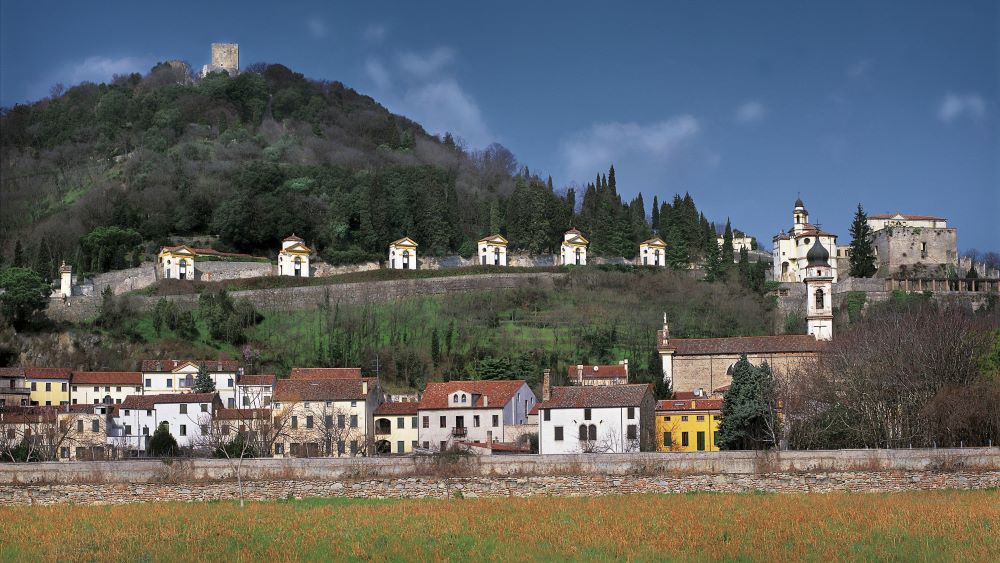
The splendid route that winds along the slopes of the hill hosting the Rocca is characterised by a succession of extraordinary places capturing the essence of the city’s history. Poet Gian Antonio Cibotto described it as ‘the most beautiful walk in Veneto’. Starting from Piazza Mazzini (lit. Mazzini Square), home to the 13th-century Torre Civica (the Civic Tower), take Via del Santuario to immediately encounter two precious buildings: the San Paolo (St. Paul) City Museum, housed in the 10th-century homonymous church, and the 15th-century Palazzo della Loggetta (the Loggetta Palace), which is now home to the information tourist office and which also hosts prestigious weddings and cultural events.
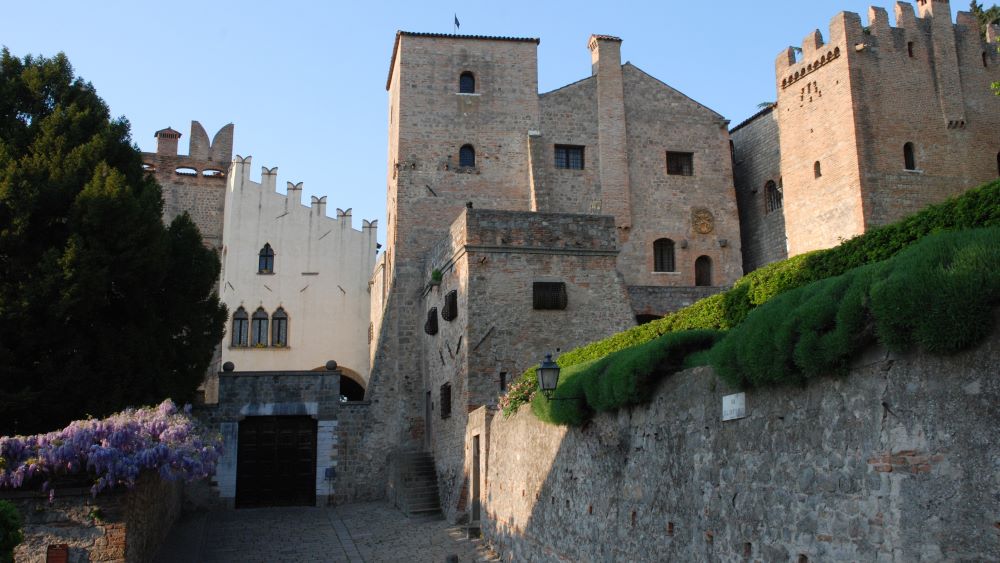
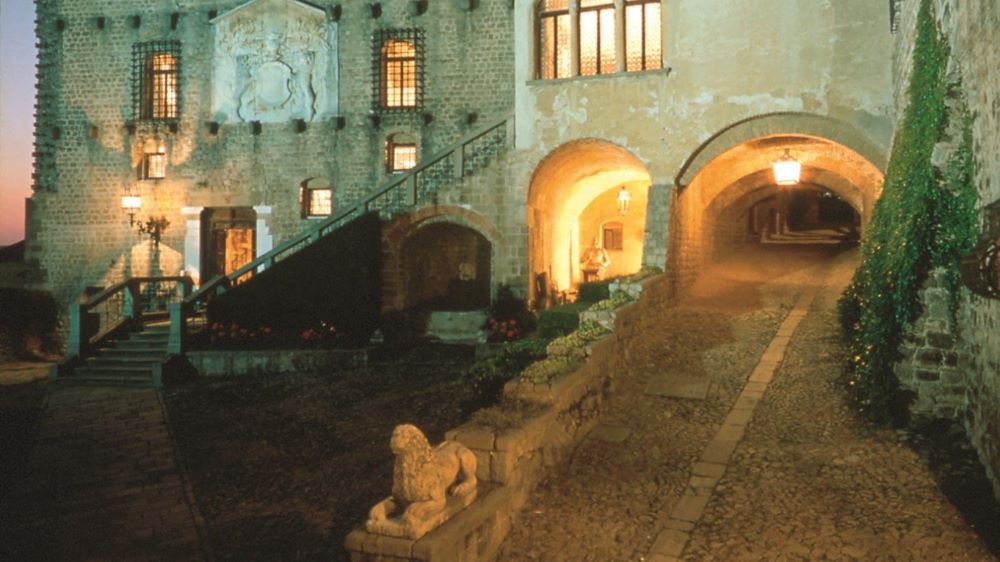
Further on, you will reach the Castle, an early medieval fortress that was renovated by Ezzelino III da Romano in the 13th century and enlarged by the Da Carrara family during the following century. At the end of the 15th century, the noble Venetian Marcello family transformed it into their residence. In 1942, it became a museum thanks to its owner at the time, Count Vittorio Cini, who enriched it with valuable collections of weapons, furniture and decorations.
Continuing uphill, you will encounter Villa Nani-Mocenigo, a splendid late Renaissance building constructed at the end of the 16th century and embellished with a magnificent monumental staircase.
Not far away are the ancient horse stables, followed by the Antica Pieve di Santa Giustina (the ancient Parish Church of St. Justina) — also known as the Duomo Vecchio —, a late Romanesque building with Gothic decorative elements that was consecrated in 1256. Among the parish church’s illustrious canons was the great poet Francesco Petrarca.
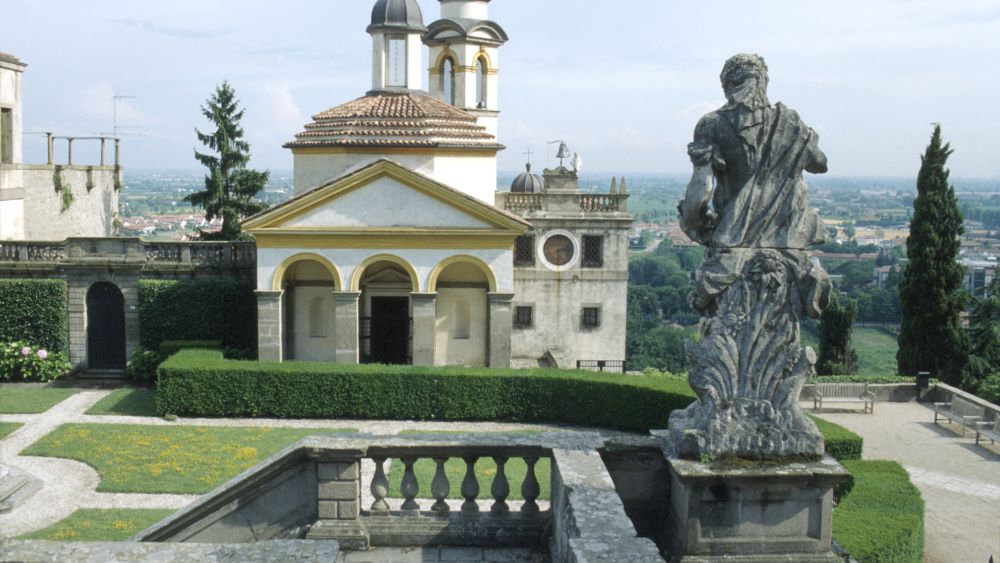
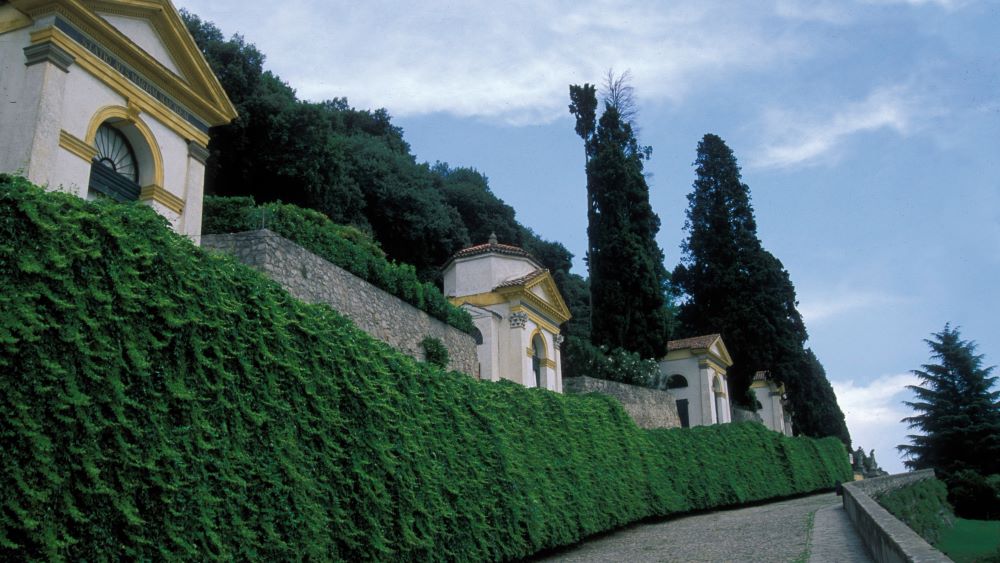
Access the large Belvedere della Rotonda (a panoramic viewpoint) through Porta dei Leoni Comitali (Lions’ Gate). Built in 1651, Porta Romana (Roman Gate), also known as Porta Santa (Holy Gate), marks the entrance to the sacred area of the Santuario Giubilare delle Sette Chiese (the Jubilee Sanctuary of the Seven Churches). This was designed by Vincenzo Scamozzi and commissioned by the Venetian noble Duodo family, who were ambassadors of the Serenissima to the Holy See. In 1605, Pope Paul V issued a bull granting the sanctuary the same indulgence privileges as the seven major basilicas in Rome. Monselice is the only example of this particular form of Roman devotion, as recalled by the inscription on Porta Santa: Romanis basilicis pares. The chapels house altarpieces from Palma il Giovane’s studio. At the end of the route stands the elegant, monumental Villa Duodo. Adjacent to the villa is the Oratorio di San Giorgio (the Oratory of St. George), which contains the relics of 27 Christian martyrs who were exhumed from Rome’s catacombs. It is believed that among them is St. Valentine, who is celebrated on the 14th of February with the popular ceremony of blessing golden keys, which are given to children for protection against epilepsy. To the left of the exedra, a staircase and then a path lead to the top of the150-metre hill, which is dominated by the imposing Mastio Federiciano (lit. Frederick’s Keep) — also known as the Torrione. This was indeed commissioned by Emperor Frederick II of Swabia, who named the city ‘Camera Speciale dell’Impero’ (lit. Special Chamber of the Empire) while visiting Monselice in 1239. Returning to Piazza Mazzini, a short walk takes you to Villa Pisani. Built overlooking the canal, its walls are entirely covered with frescoes attributed to the circle of Benedetto Caliari (mid-16th century).
Along the canal, you can also admire Villa Contarini, Villa Emo and the Castello di Lispida (lit. Lispida Castle), also known as Villa Italia after King Victor Emmanuel III stayed there in 1918.
Places of Interest

L’edificio, che oggi ospita la Biblioteca comunale e precedentemente era adibito a sala cinematografica, è denominato San Biagio perchè già nel XV secolo qui sorgeva un oratorio intitolato a questo santo. A partire dal 1618 divenne la sede della Confraternita dei Battuti Bianchi. Una pregevole tela dipinta nella seconda metà del ‘600 da Joseph Heintz, raffigurante la processione dei Battuti, è conservata nel Duomo cittadino.
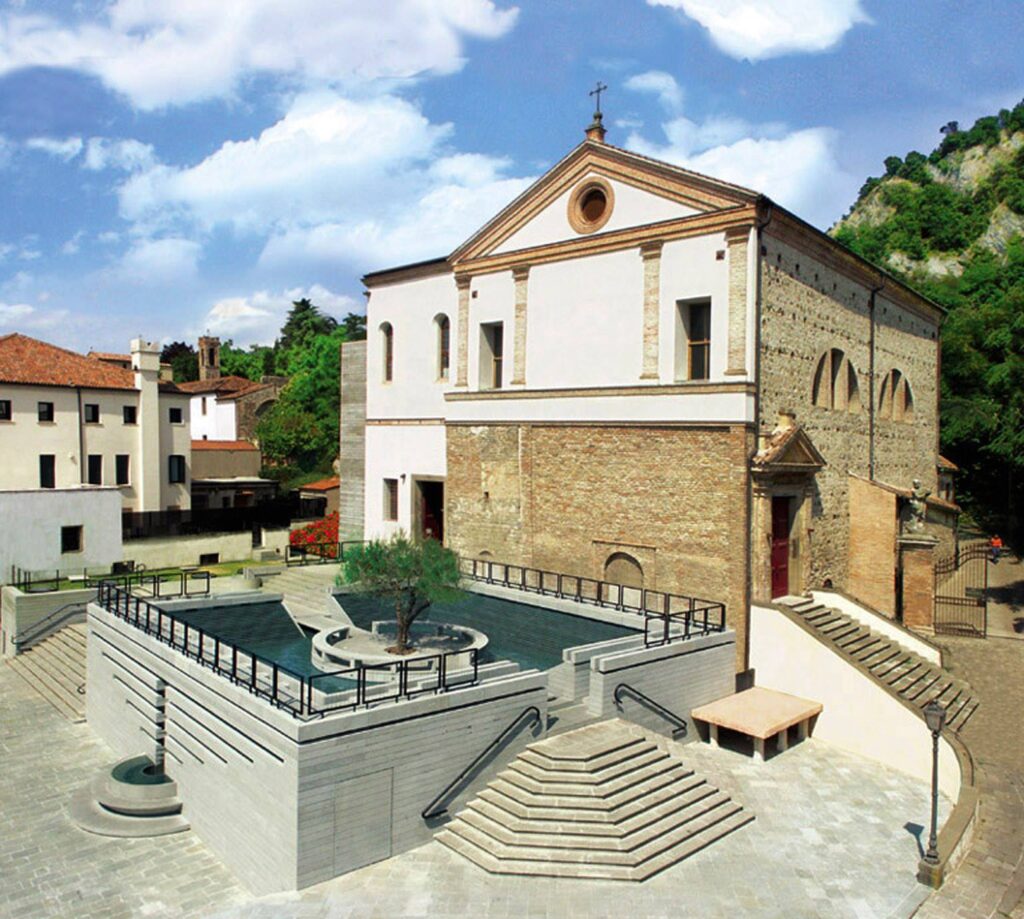
La chiesa di San Paolo, uno degli edifici di culto più antichi della città (VII-XVII sec.), dal 2017 è sede del Museo Civico. All’interno si intrecciano due percorsi di visita: quello museale, con reperti archeologici preromani e romani rinvenuti nel territorio monselicense, e la chiesa stessa, con le sue stratificazioni, tra cui la suggestiva cripta con raro affresco raffigurante san Francesco d’Assisi (XIII sec.).
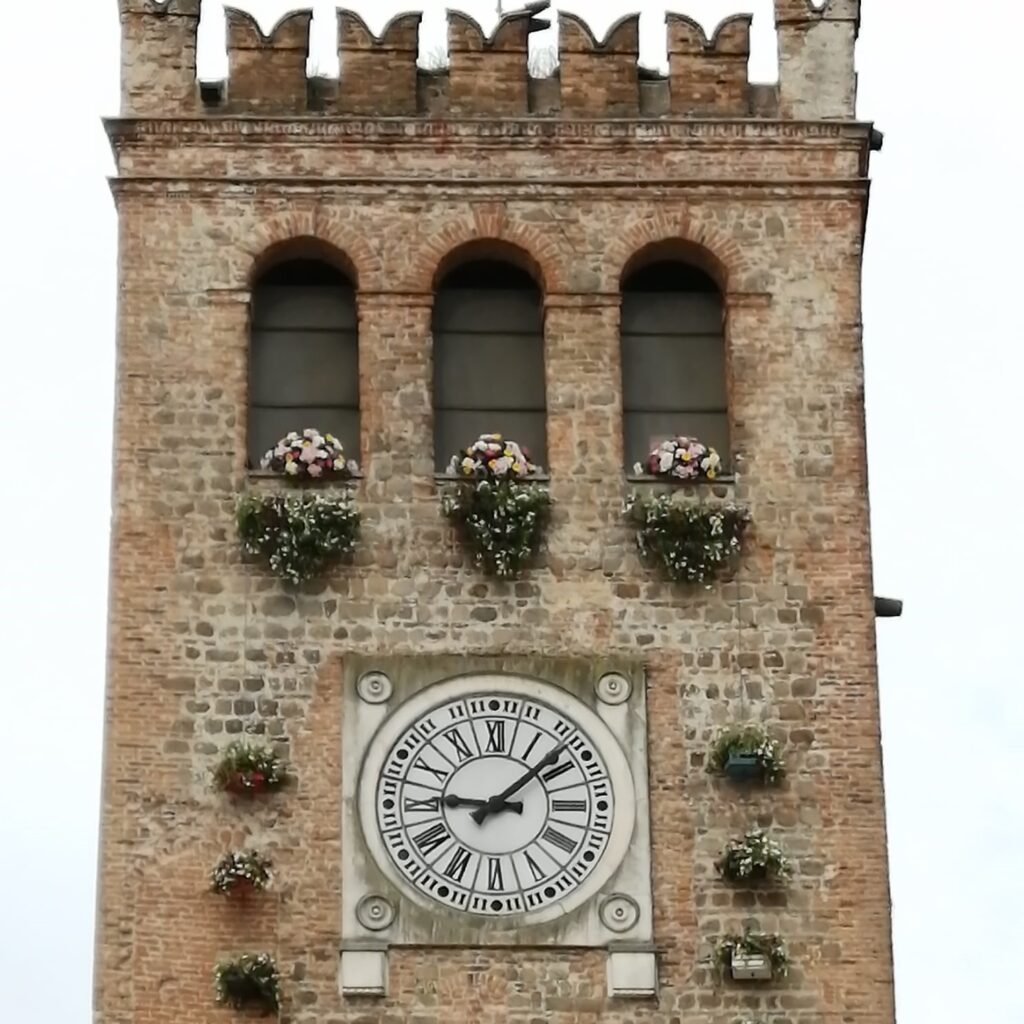
Detta anche dell’Orologio, è il caposaldo di Monselice. Fu fatta erigere nel 1244 da Ezzelino da Romano, unitamente ad altre opere di difesa e fortificazione, su disposizione dell’imperatore Federico II di Svevia, presente a Monselice nel 1239. Utilizzata come alloggiamento per le milizie che controllavano l’accesso alla città dal fiume, si caratterizza per la muratura a corsi di conci di trachite alternati a mattoni. Nel XVI secolo fu aggiunta una cella sommitale per collocarvi la campana civica, tra le più antiche d’Europa.
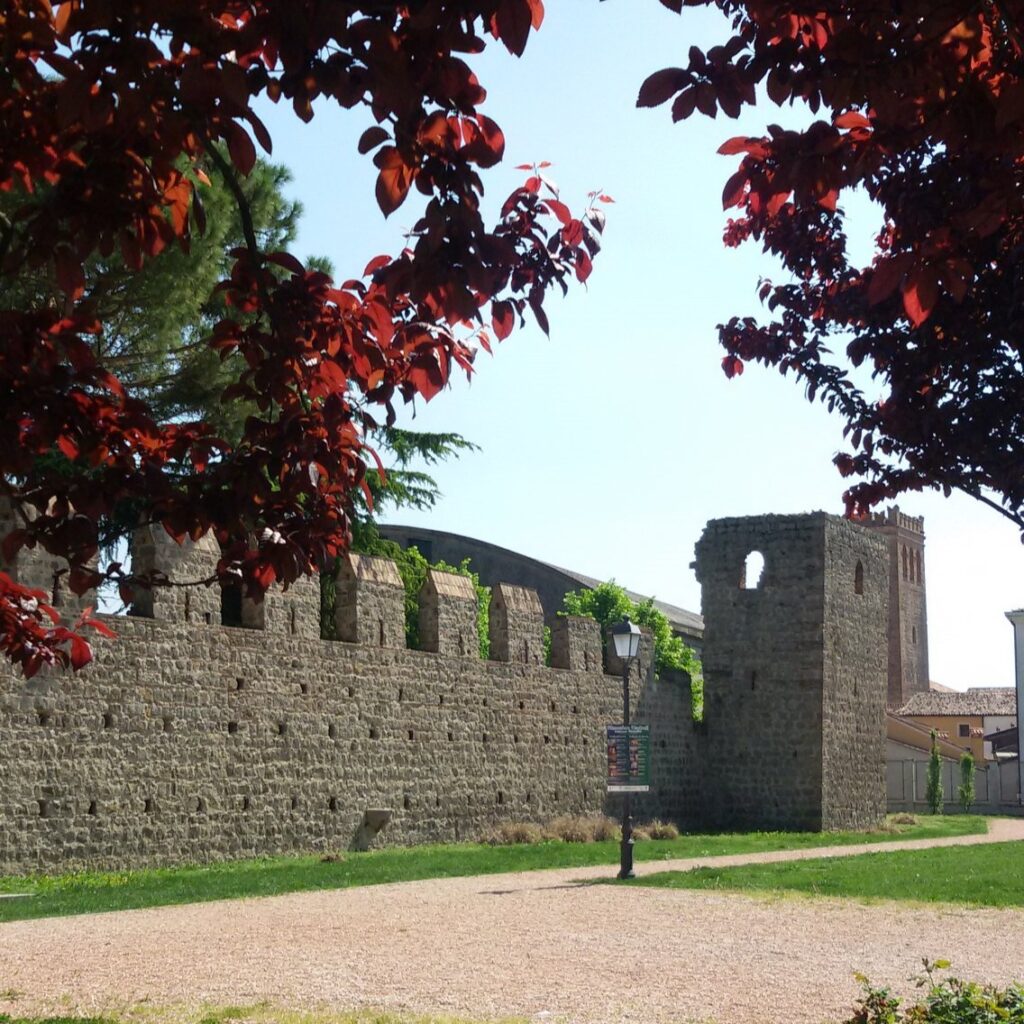
Monselice è classificata come città murata del Veneto. Ancora oggi è possibile vedere ampi tratti delle antiche fortificazioni che giunsero a contare ben cinque cerchie murarie. Dal Mastio Federiciano, sulla sommità del colle, discendono a valle fino a lambire le rive del fiume. In prossimità del Campo della Fiera, fino al XIX secolo, vi era l’accesso alla Città da Porta Padova o di Sant’Antonio, mentre oggi è ancora visibile la Porta Giudecca.
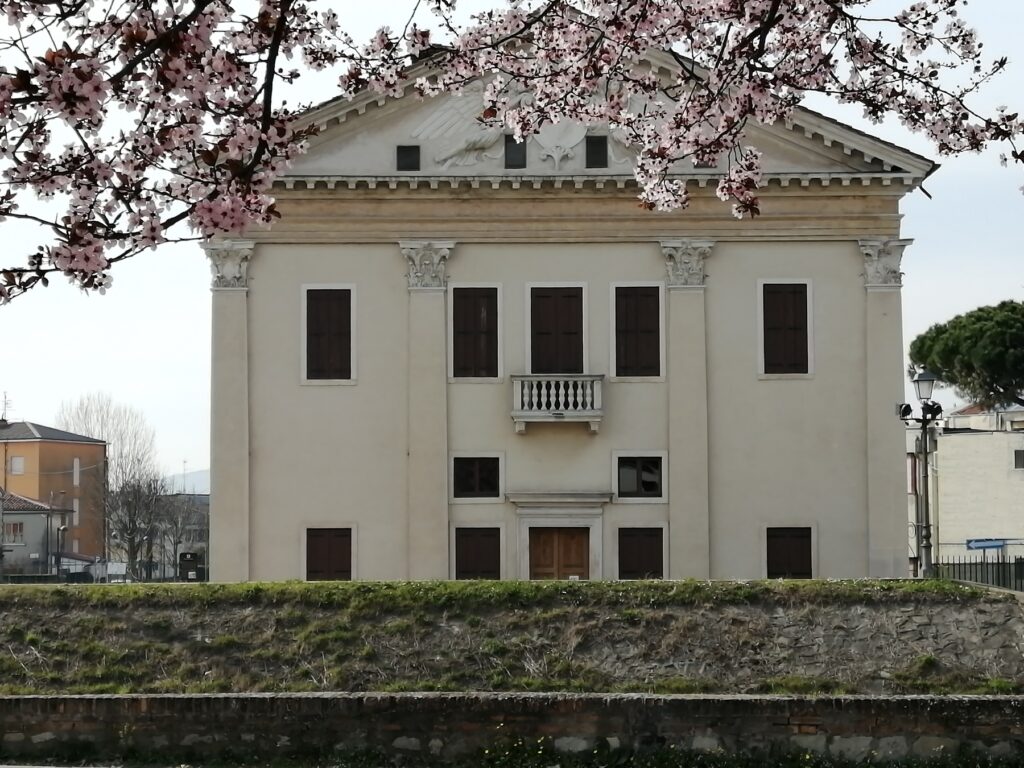
Costruita intorno al 1556 per volere di Francesco Pisani de Zuanne, patrizio veneziano, quale dimora di sosta e ultimo approdo fluviale prima di proseguire via terra il suo viaggio verso Montagnana, dove la famiglia risiedeva nei periodi estivi. Di impianto tipicamente palladiano, conserva affreschi attribuiti a Benedetto Caliari.

L’edificio, che prende il nome dalla nobile famiglia degli Emo, fu costruito tra la fine del XVI e gli inizi del XVII secolo su preesistenti manufatti medievali. Divenne dapprima ospedale civile, successivamente scuola pubblica e oggi è di proprietà comunale. Dopo l’attento restauro avvenuto nel 1997 ospita uffici pubblici.
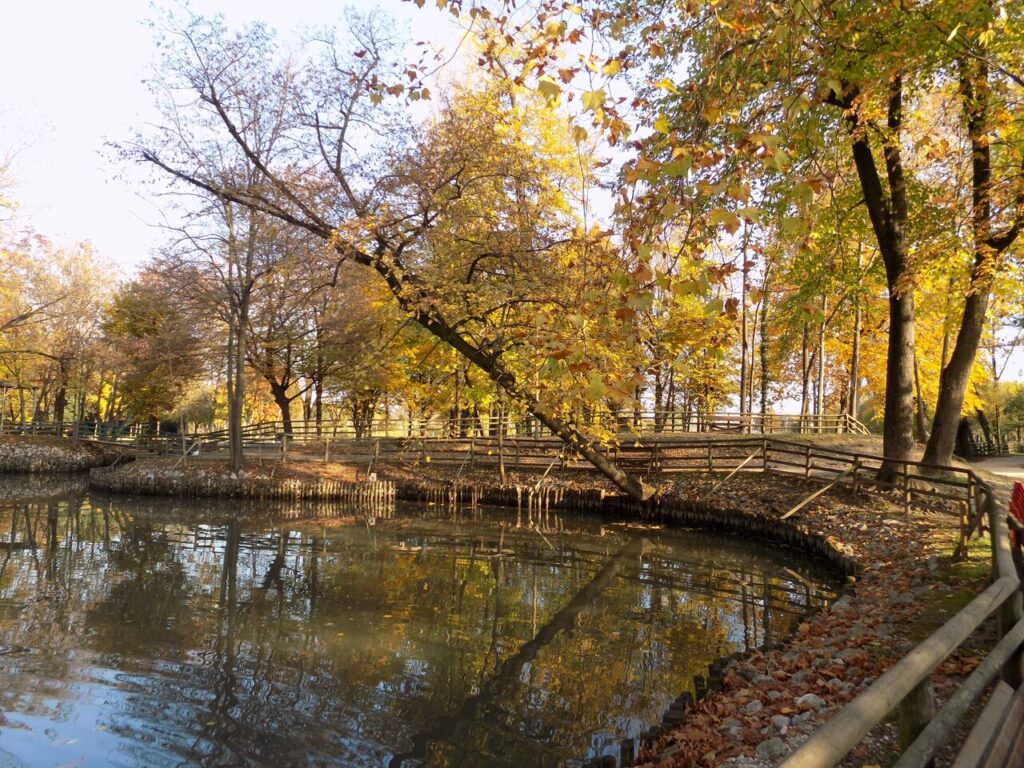
Le origini di questa oasi verde si devono al padovano Giovanni Battista Cromer che, tra la fine del XVIII e gli inizi del XIX secolo, volle dotare la propria villa di un ampio parco all’inglese con laghetto, fossati, ghiacciaia, abbellito di pergolati, nicchie e statue, tra queste l’Esculapio di Antonio Canova, ora conservata ai Musei Civici di Padova. Dal 1990 è parco cittadino.

Sorto verso la metà del Quattrocento quale Monte di Pietà cittadino, inglobando un tratto delle più antiche mura medievali. Nel XVII secolo venne aggiunta la scenografica loggia da cui il palazzo prende il nome. L’edificio ha sempre avuto destinazione di uso pubblico ospitando, in epoche diverse, il Gabinetto di Lettura, la Biblioteca Comunale e, dal 2014, gli uffici Cultura-Turismo e l’Ufficio Turistico.
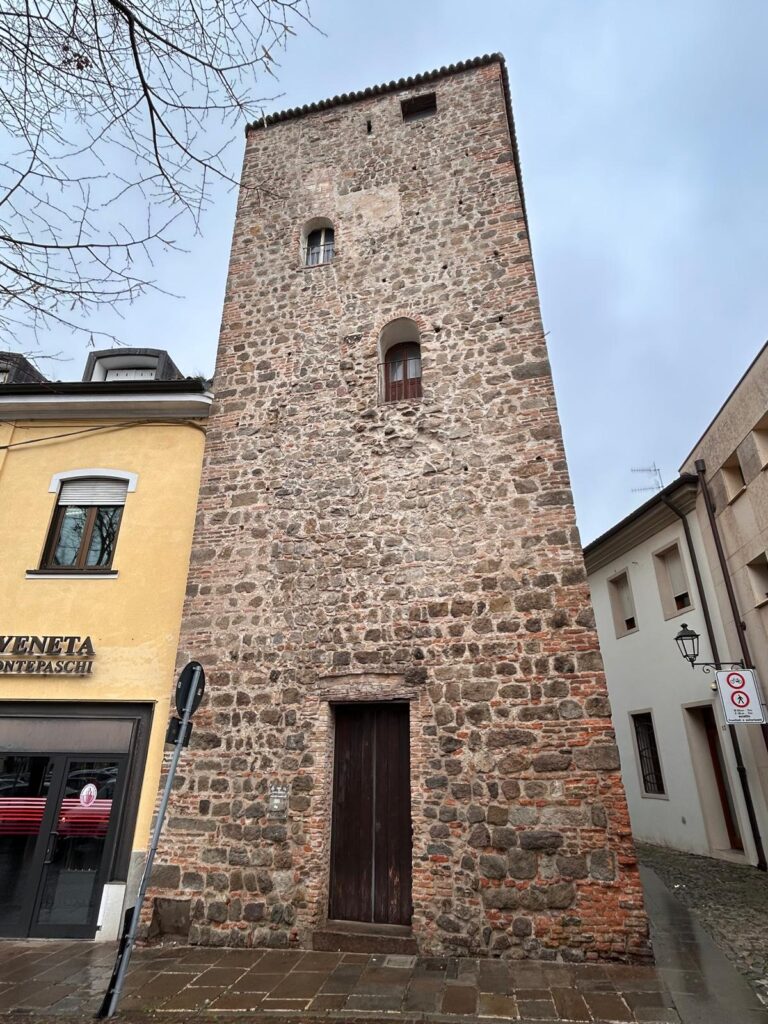
Sorge in epoca Carrarese (XIV secolo) a completamento, come altre dodici torri, del perimetro più a valle della cinta muraria medievale. La torre prende il nome dall’antistante piazza, un tempo sede del mercato delle erbe, intitolata a Opsicella, leggendario fondatore della Città. Di proprietà comunale è adibita a sede espositiva. Un percorso suggestivo a ridosso delle antiche mura medievali unisce questa torretta con la Torre Civica in Piazza Mazzini.
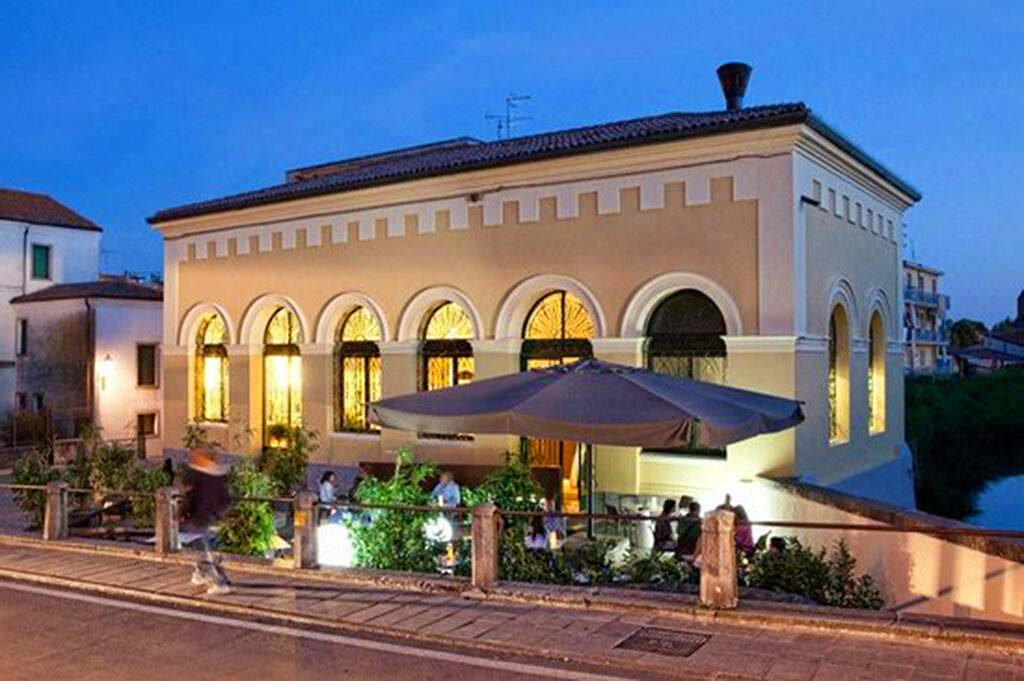
Questo edificio monumentale ha sostituito l’antica pescheria cinquecentesca che era collocata oltre il ponte sul canale di Monselice. A partire dall’ultimo decennio del XIX secolo fino al secondo decennio del XX secolo è stata sede del mercato settimanale del pesce. Al centro del cortile in trachite è collocato un pozzo seicentesco in pietra d’Istria, che originariamente abbelliva la Piazza Maggiore, oggi Piazza Mazzini.
Edificata alla fine del Duecento per ospitare l’ordine dei Frati Predicatori, meglio conosciuti come Domenicani. Rispecchia il classico stile di costruzione minoritica a croce latina. Nel XVIII secolo furono aggiunte le navate laterali mentre il campanile risale al XV secolo. Dopo la soppressione napoleonica e l’abbandono da parte dei Domenicani, divenne di proprietà privata fino alla fine del XIX secolo quando fu acquisita dal Comune.
L’edificio attuale è il risultato dell’unione di tre edifici medievali di proprietà della collegiata di Santa Giustina. L’opera di restauro risale al XVII secolo, quando la facoltosa famiglia Tassello lo trasformò in propria residenza cittadina. Presenta un ampio salone centrale e un brolo sul versante del colle. L’ingresso è sulla suggestiva via Santo Stefano Superiore che unisce il Castello con la Chiesa di San Martino. Divenuto di proprietà comunale, ospitò in passato le locali prigioni. Dopo un accurato restauro, l’edificio, a partire dal 1999, è adibito a ostello.